How Jimmy Carter stayed in tune with the arts
From Dickey Betts and Dylan to Bach and Beethoven, Jimmy Carter appreciated music, and, like today’s presidential candidates, used it to raise money and motivate voters.
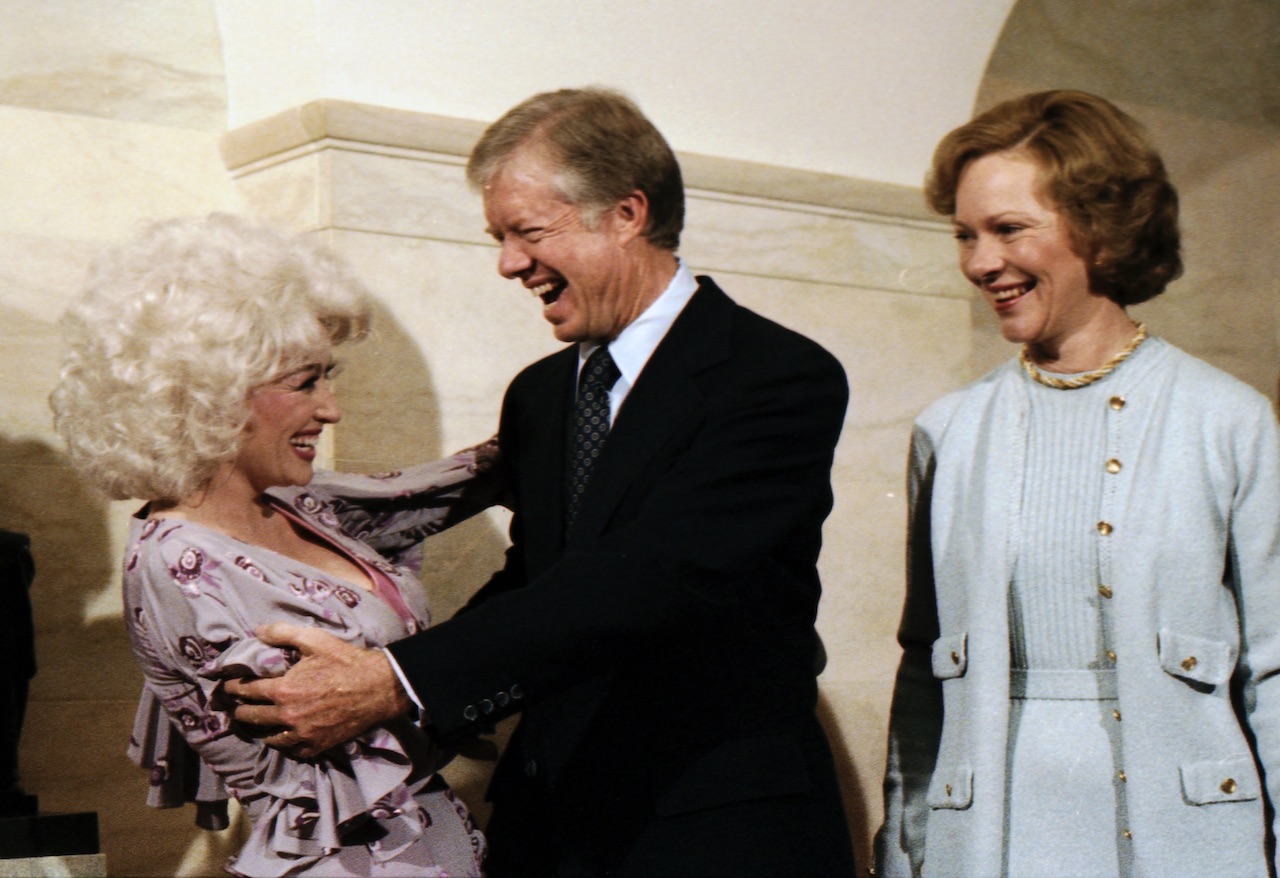
Former President Jimmy Carter’s love for music, especially classical music, is well-known. While in the White House, he listened to classical music in his office for up to 10 hours a day. And the first large contribution he received when running for office as governor of Georgia was $1,000 from Atlanta Symphony Music Director Robert Shaw.
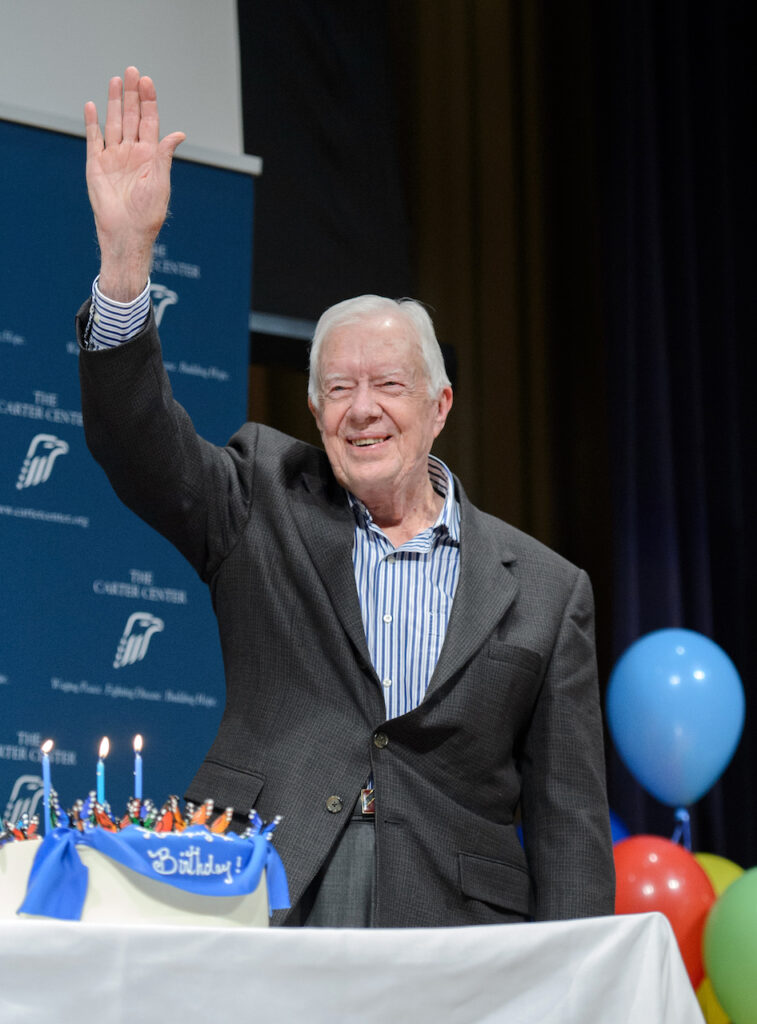
That meant a lot to him financially and as a token of support from the local music community. He is also a painter and has relished and engaged in other forms of art over his long life. A September 17 local event, Jimmy Carter 100: A Celebration of Song, at the Fox Theatre, will honor, in music and song, Carter’s 100th birthday and decades of achievements.
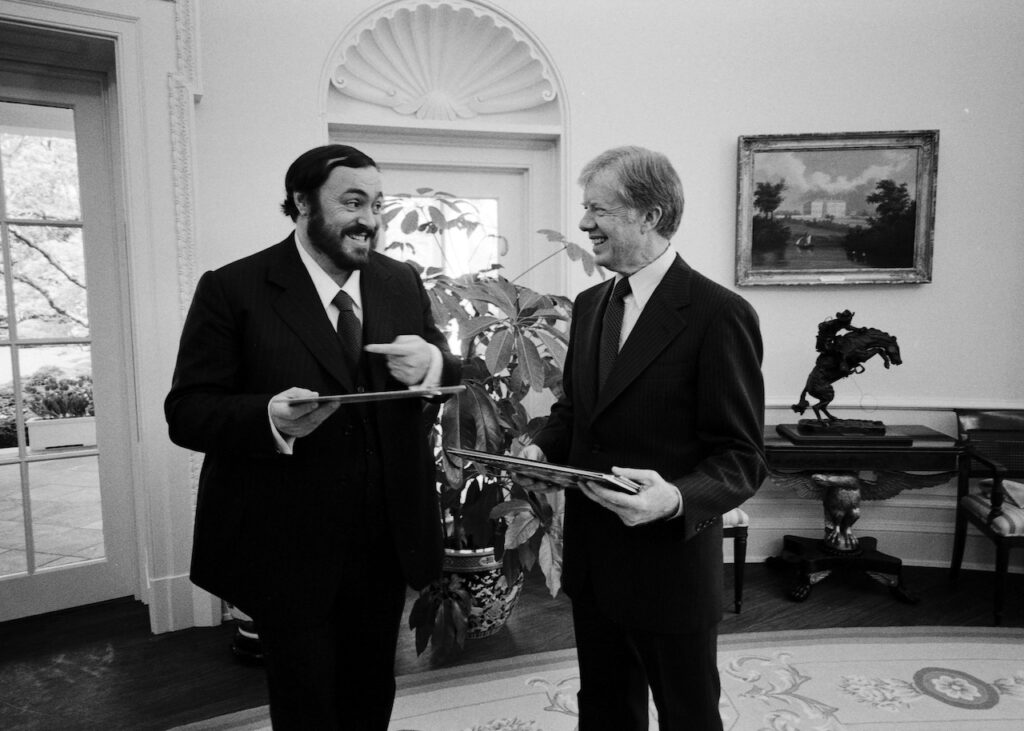
Carter served as governor of Georgia from 1971to 1975 and as the president of the United States from 1977 to 1981.
The book Carter on the Arts, published in 1977 by Americans for the Arts — a national nonprofit — with help from a grant by Thomas Meloy, highlights excerpts from some of the former president’s noted interviews, as well as recollections about the events that shaped him.
As former second lady, Joan Mondale, wrote in her introduction: “I love the story that President Carter tells about his fond memories of the time a visiting symphony gave a concert in south Georgia near his home in Plains.”
“It was the first time a symphony had ever played in that area, and he said: ‘Everybody from the county, merchants to the farmers, went, listened and enjoyed. The orchestra’s visit was the main topic of conversation for weeks afterwards. People felt that something beautiful had touched their lives.’”
The arts impacted the Carter family as well. In the November 1976 edition of Playboy, Carter talked about his children and the effect Bob Dylan had on them. “I have three sons,” he wrote, “who now range from 23 to 29, and the oldest of them was very influenced by Bob Dylan in their attitudes toward Civil Rights, criminal justice and the Vietnam War,” Carter said. This was when Carter was entering politics, and he said he could see the impact Dylan had on young people of that era.
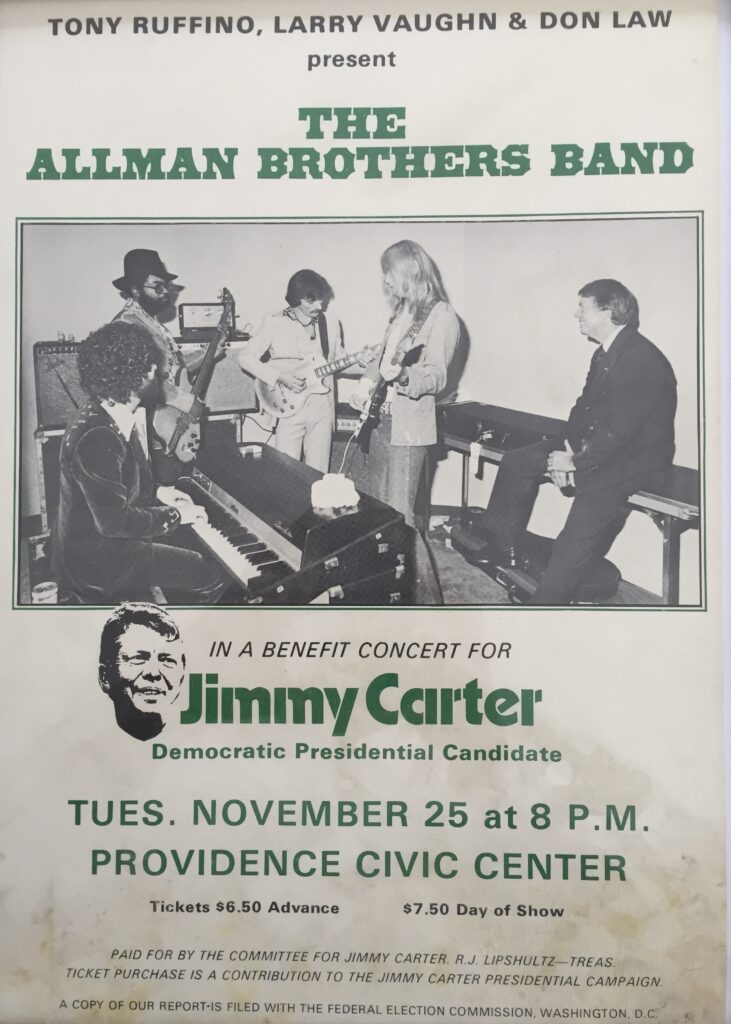
In that interview, Carter mentioned that when he became governor, he got to know some of the people at Capricorn Records in Macon, Georgia — among them Otis Redding.
“It was they who began to meld the White and Black music industries, and that was quite a sociological change for the region. So as I began to travel around Georgia I made contact a few days every month or so with Capitol Records, just to stay in touch with people in the state, and got to know all the Allman Brothers, Dickey Betts and others. Later on, I met Charlie Daniels and the Marshall Tucker Band.” As time went on, Carter realized the importance of the arts and music to bringing people together, says Paige Alexander, CEO of the Carter Center.
Carter and his wife Rosalynn met as teenagers. Everything they did in their 77-year marriage they did together, says Alexander. “The growing interest in music was something they enjoyed,” she says. During his time as president, he was a frequent visitor to the Kennedy Center for Performing Arts in Washington, D.C, attending plays, ballets and opera. In 1978, the two hosted the White House Jazz Festival.
While he was governor of Georgia, the state was not known for robust support for the arts. According to the September 1976 Word from Washington, published by Americans for the Arts, with information supplied by J. Golodner Associates of Washington D.C., the State Arts Commission was done away with and Carter initially severely cut the state’s budget.
According to that same report, the state’s art budget increased slightly during Carter’s time in office, from $128,000 to $183,000 annually when he left office in 1975.
One of Carter’s undeniable contributions to the arts as a governor, though, was helping the film industry grow to where it is now. In 1973, a year after the hit film Deliverance was shot in Georgia, he began the State Motion Picture & Television Advisory Commission in hopes of touting Georgia as a filming location.
“That was 50 years ago (last year) and Gov. Brian Kemp celebrated that recently,” says Alexander. “That was the beginning of Georgia being known for more than just Coca-Cola. It was opening up businesses and economic development through culture. That is one of the reasons we now have the Tyler Perry Studios and (more).”
Carter’s appreciation for the arts began at an early age and has expanded over time. In his autobiography, Why Not The Best?, he wrote that his mother was an avid reader. So was he. “Within my memory, whenever anyone has asked me what I wanted for Christmas or my birthday present, I always replied ‘books,’” Carter is quoted as saying.
“When I was 4 years old, my godmother — also a nurse like my mother, though apparently not a great reader — gave me a set of the complete works of Guy de Maupassant. It was, of course, years later before I read through the collections.”
Carter’s school superintendent encouraged him to learn about art, music and literature, and Carter later became a prolific writer himself, authoring 32 books. He received a “Best Spoken Word” Grammy Award for his recording of his 2005 book, Our Endangered Values: America’s Moral Crisis.
He also developed a love of painting. When he was in the Navy, according to Alexander, one of his colleagues had a learn-how-to-paint kit. When he was transferred, he told Carter not to let it go to waste. Carter put the kit to use. In the 1980s, he started painting again in his spare time, and more than 100 of his paintings are on display at the Carter Center. “That was a space for him to be himself,” Alexander says.
Woodworking became a favorite, too. “In typical Jimmy Carter-like way, when he was in the Navy, to save money he was going to make their own furniture. Woodworking ended up being near and dear to his heart. He took it on after the White House and here while he was at the Carter Center,” says Alexander.
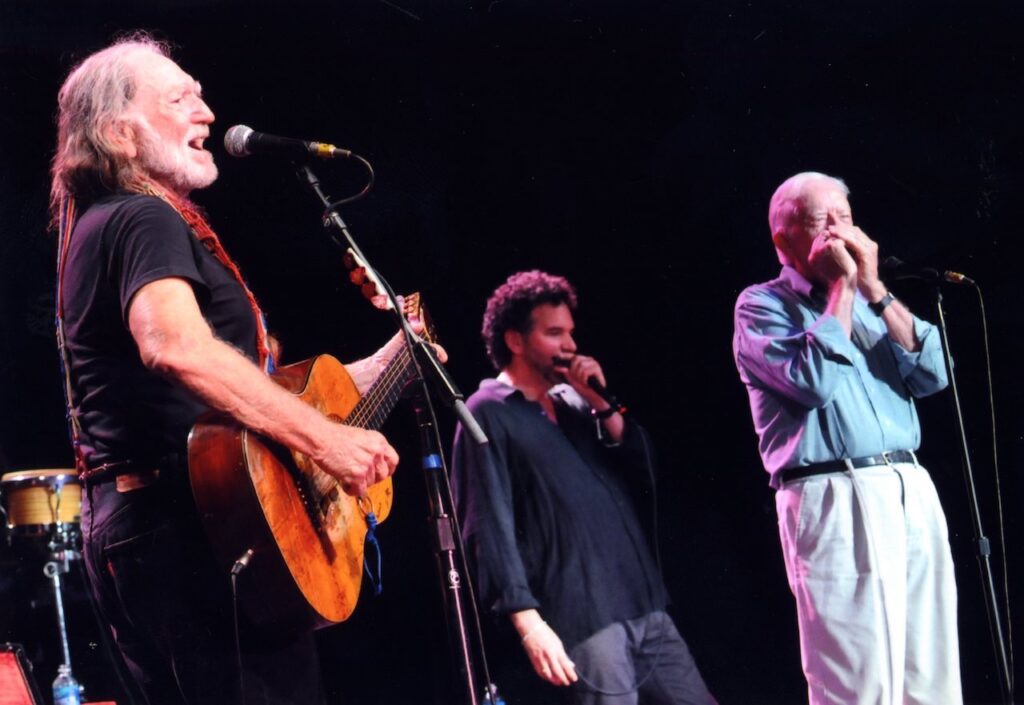
The upcoming 100th birthday celebration will feature a night of rock, gospel, pop, country, hip-hop and classical music. An array of performers including Chuck Leavell, Bebe Winans, India Arie, Carlene Carter, the Atlanta Symphony Chamber Chorus and more will perform, while special guests such as Sean Penn, Dale Murphy and Killer Mike will share in-person sentiments.
Recent additions to the line-up include Angélique Kidjo, the Grammy Award-winning singer who hails from Benin; songwriter, guitarist and vocalist Duane Betts, son of Allman Brothers co-founder Dickey Betts; Grammy-winning vocalist Lalah Hathaway; and the B-52s, the rock band formed in Athens, Georgia, known for their eclectic new wave style and hits like “Love Shack” and “Rock Lobster.” Academy Award-winning actor Renée Zellweger will also participate in the celebration.
Jimmy Carter has been under hospice care for the last 18 months and Carter won’t be able to attend the event; he will receive a tape to watch later.
According to Alexander, “We thought this would be an excellent tribute for his 100th birthday to get some wonderful bands who have some connection to him (to talk about how the relationship) has changed them as musicians and made them realize their music can reach broad audiences. It’s an eclectic mix.”
It’s been important to Carter to engage in all sorts of arts disciplines, over the years, says Alexander. “He’s been involved in everything from music to woodworking to painting. That encapsulates 100 years of how he expressed himself. That rounded him out as a person, showing the Renaissance man that he really was.”
::

Jim Farmer is the recipient of the 2022 National Arts and Entertainment Journalism Award for Best Theater Feature and a nominee for Online Journalist of the Year. A member of five national critics’ organizations, he covers theater and film for ArtsATL. A graduate of the University of Georgia, he has written about the arts for 30-plus years. Jim is the festival director of Out on Film, Atlanta’s LGBTQ film festival, and lives in Avondale Estates with his husband, Craig, and dog, Douglas.
STAY UP TO DATE ON ALL THINGS ArtsATL
Subscribe to our free weekly e-newsletter.

PLEASE SUPPORT ARTSATL
Your Gift Sustains the Coverage You Count On!
Related Posts