
Historical ghosts animate Maggie Nye’s novel, ‘The Curators’
Maggie Nye became obsessed with Leo Frank, who was convicted in one of the early 20th century’s most notorious murder trials. The novel she wrote about it, The Curators, has just been published.
::
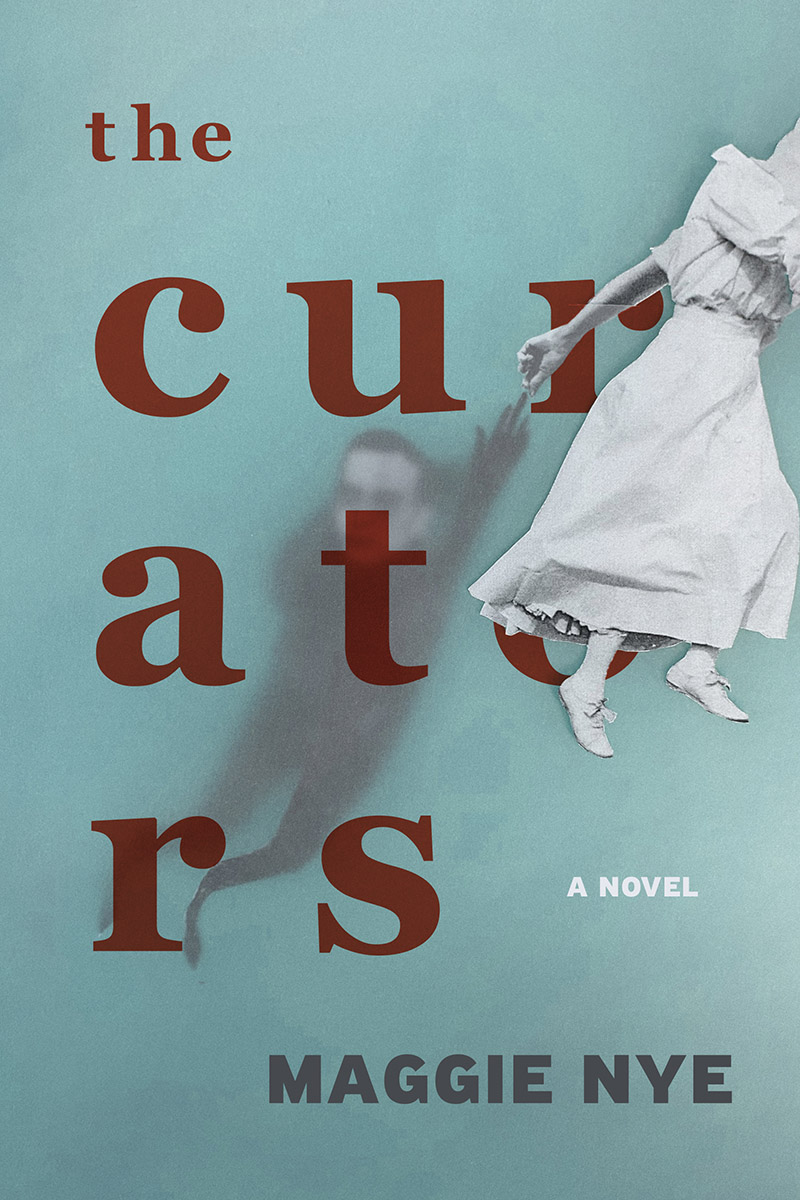 When Maggie Nye read Philip Roth’s The Plot Against America, a reference at the end caught her attention. The Leo Frank case was mentioned — and the author wasn’t familiar with it. “I realized this was a huge event in American history I knew nothing about,” she says. As she started to learn more, her fascination with the topic led to her debut novel.
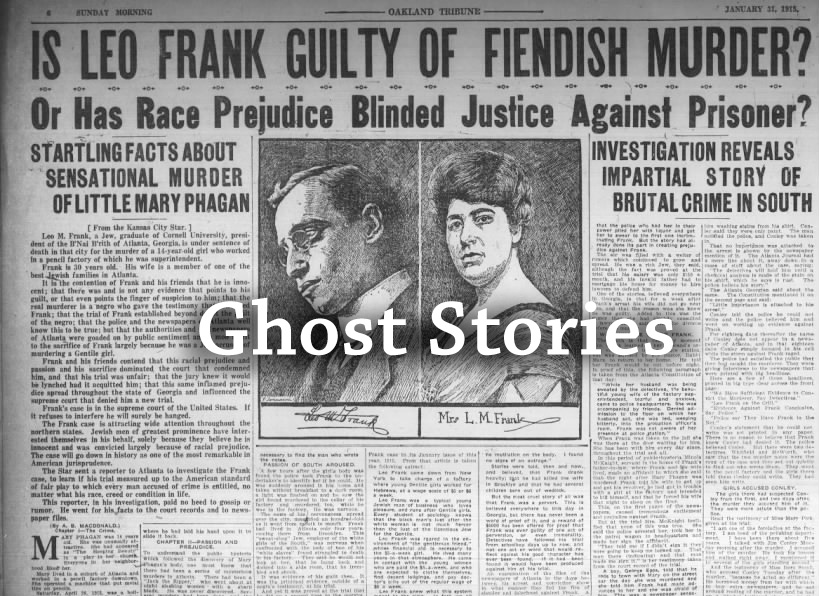
The Curators, released in June by Northwestern University Press, uses the backdrop of the Atlanta case, which involves the 1913 death of 13-year-old Mary Phagan and Frank, a factory supervisor who was found guilty of her murder and was later kidnapped from prison and lynched. Nye’s fictional story — blending historical fiction and magical realism — follows Ana Wulff and her four teenage friends in 1915, living in Atlanta’s Jewish south side and all infatuated with Frank as he awaits trial. As the case progresses, they begin to identify with Phagan. When Frank is lynched, however, the five make a golem in his image that leads to chaos, threatening to break up their bond.
The Curators began as a short story published in 2017 in Pleiades and was Nye’s thesis project for a master’s degree at the University of Alabama.
One detail in particular leapt out at her as she was doing research on the Frank case. According to Nye, detectives found a set of notes besides the body called the “murder notes” written in past tense, which describe her assault as if her dead body had written the notes. The phrase “night witch” appears in one note, and the phrase is taken by investigators to be a misspelling of “night watchman.”
“That became a fascinating detail, an odd, morbid but surreal [one],” Nye says. “I thought if you were a child reading about this case, what would you think about a night witch being involved in a violent event in your community? I gave that thought to my main characters and that was the seed of the short story. It grew into a novel based on the fact that I couldn’t stop writing in that collective voice.”
One aspect she learned quickly was the complexity of the Frank case and its aftermath. The whole country was following the trial. “Media coverage relied heavily on racial stereotypes, white men’s anxiety about an industrializing South, about black people’s role in the economy and Jewish people’s role and women’s roles,” she says. “The trial and coverage of it were a cesspool of anxiety. I think there was a lot of frustration about Frank and his legal team, all the appeals to get the verdict overturned and his sentence commuted at the eleventh hour, which made a lot of people angry and felt like a wound to the justice system.”
The five girls in The Curators — referred to as the Felicitous Five — deal with a desire to make sense of the anxiety and violence surrounding them. They also fight for control, knowledge and power. “They are in this transitional age where their sexual desires are emerging and they don’t know what to do with that either,” Nye says. “They are emerging in inappropriate ways for Leo Frank and each other and for Mary to some extent as well, which is completely wrong headed — to want to be assaulted — but there is some perverse desire to be a sexualized body.”
Although Ana and her friends have no idea what it would be like to be Mary and deal with her work life and labor conditions, they still see her as a figure of freedom, even after her death, because of her beauty, popularity and maturity. “She died in a horrific way, but they see her as someone who gets to be out in the larger world, who gets to know the world of men and gets to have independence. Mary has a close, possible sexual relationship with Leo and other men. These are sheltered privileged girls, and they certainly don’t understand what is going on in their bodies.”
The golem, living in Ana’s attic, is a way to keep Frank alive. Yet it turns out to be a troublemaker and not highly functional. “Ana is the proprietor, the caretaker, and she takes it upon herself — driven out of a sense of responsibility — to train and learn what the golem is capable of. This comes between the girls because of the secrecy and because the golem never acted the way they wanted it to act. Their dreams did not manifest.”
Nye is currently pursuing her PhD in creative writing at Florida State University. Growing up in Maryland, she never heard of the Frank case but says colleagues in Alabama and Florida have not either, so she can’t blame geography. As part of her research, she read books and issues of the Atlanta Journal-Constitution published during the trial years (1913-1915) and visited the Atlanta History Center, the Breman and the Marietta History Center. Her top priority was getting details right and doing justice to the story’s complexity.
The author will be returning to Atlanta twice this summer. The first will be to teach the writing workshop “Needful Voices: Experiments in Writing the Collective” at the Little Five Points Center for Arts and Community and participate in a reading event at Whitespace gallery, both presented by Lostintheletters on July 27. A second trip will bring her to Bookish Atlanta for a reading on August 14.
She’s aware she’ll be in a place where some still talk about the case. “I expect to be humble. I address this a little in my historical notes at the end of the book. I know I got some things wrong. There is no way to go through this process and not have gotten things wrong. I expect to learn; it is not my intention to upset anyone or to make any strident political or historical claims. My book exists to agitate and fascinate and ask questions, but I can also expect questions to be asked of me — and I don’t know that I will have the answer for all of them.”
::
Jim Farmer is the recipient of the 2022 National Arts and Entertainment Journalism Award for Best Theatre Feature and a nominee for Online Journalist of the Year. A member of five national critics’ organizations, he covers theater and film for ArtsATL. A graduate of the University of Georgia, he has written about the arts for 30-plus years. Jim is the festival director of Out on Film, Atlanta’s LGBTQ film festival, and lives in Avondale Estates with his husband, Craig, and dog, Douglas.
STAY UP TO DATE ON ALL THINGS ArtsATL
Subscribe to our free weekly e-newsletter.

