Heavy metal titans bring controlled chaos and ’Moby Dick’ to Atlanta
For its most dedicated fans, metal is not merely a genre — it is a creative legacy whose evolution is shared, studied and passed down from one generation to the next.
At Ameris Bank Amphitheatre on June 25, outsiders might have seen a ragged assortment of goths, punks and longhairs, but these were the metal faithful and they were there to honor a crucial stage in the history of their beloved art form.
This was the “Ashes of Leviathan” tour, featuring two titans of modern heavy metal — Atlanta’s own Mastodon and Richmond, Virginia’s Lamb of God were co-headliners. They were marking the 20-year anniversaries of their breakout albums, Ashes of the Wake from Lamb of God and Leviathan from Mastodon. To those outside the metal tribe, it no doubt looked and sounded like animalistic aggression in musical form, but for enthusiasts it was an opportunity to see and celebrate two titans of the genre. Both bands played their albums in their entirety.

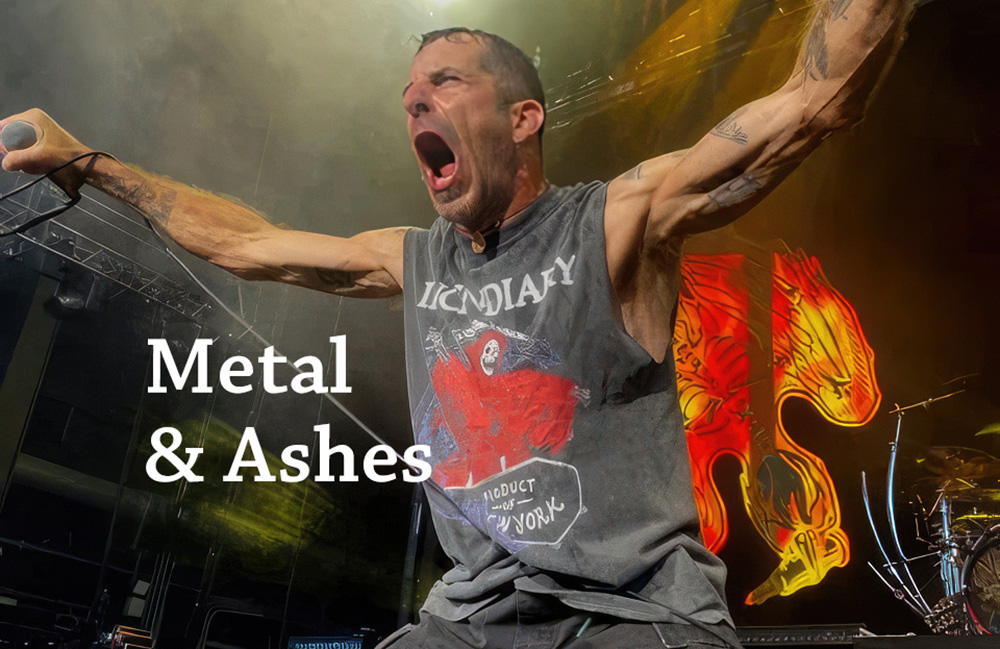
Lamb of God escalated the bestial abandon of the opening acts — Kerry King and Malevolence — with their own brand of controlled chaos. Lead screamer Randy Blythe stormed about the stage delivering his signature banshee wails as his band unleashed machine gun guitar riffs with militaristic precision.
The group has an unrelenting and often intricate sound that speaks to metalheads and musicians alike, but there is a uniformity to all of it. Lamb of God is not a band to relent or offer much in the way of dynamics: They start at a 10 and stay there. Only guitarist Mark Morton’s virtuosic leads offered color in the course of the group’s monochromatic set.
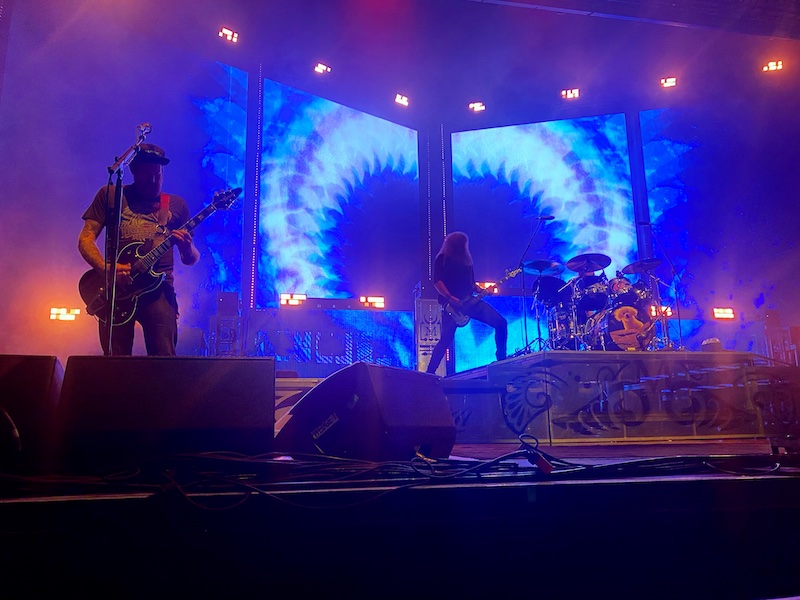
That unceasing brutality made Mastodon’s unique brand of high-octane space rock stand out all the more by comparison. Leviathan cuts like “Blood and Thunder” and “Aqua Dementia” can go toe to toe with the ravenous offerings of Lamb of God, but such songs are counterbalanced by moodier atmospheric fare and an emphasis on compositional diversity. Watching the band unfold Leviathan in its entirety — complete with a laser light show, psychedelic animations and other theatrics — made the set feel like a return to the glory days of arena-sized progressive rock.
In 2004, heavy metal was experiencing a stateside renaissance. The masked men of Slipknot had proven that extreme metal could rocket to the top of the U.S. charts. They ushered in a newfound enthusiasm for the genre’s outer reaches. European exports such as Opeth and In Flames were making inroads in the United States, and Trivium was initiating a resurgent interest in traditional thrash metal.
But the year would also see two critical releases from newly emergent innovators: Ashes of the Wake from Lamb of God — which addressed the post 9/11 Iraq war and its repercussions — and Leviathan from Mastodon. The two groups went in profoundly divergent directions: Lamb of God combined the intricate precision of death metal with the groove-oriented stomp of Pantera, while Mastodon merged the guttural realms of sludge metal with classic progressive rock.
“When I look back at celebrating this album, I don’t think of it as nostalgia,” recalls Mastodon bassist Troy Sanders. “I’m still high on that record 20 years later.”
That high is understandable. The release of Leviathan catapulted Mastodon into the heavy metal stratosphere. The band that had once toured dive bars and basements was suddenly opening for Metallica, Slipknot, Slayer and Motorhead in massive arenas.
Mastodon’s Southern-stoner-meets-bookish-music-nerd sonic ethos was already a long shot in terms of mainstream appeal, but Leviathan’s subject matter — a hard rock retelling of Herman Melville’s novel Moby Dick — made the project all the more daunting.
Sanders is quick to point out that it was Mastodon drummer Brann Dailor and his vision for the album that guided the band’s sonic ship through those uncertain waters. After reading Moby Dick on a 24-hour flight from Hawaii to London, he saw a parallel between Melville’s narrative and the band’s own story.
“He said ‘guys, the book is exactly like us,’” Sanders explained. “Ahab was crazy; we’re crazy. He persisted, wanting to find this whale that may or may not exist. We’re persistent, wanting to find musical success that may or may not exist.” Dailor laid out more similarities between the book and the band but eventually landed on the clincher: The story refers to the whale as the “sea-salt mastodon.”
Galvanized by the parallels, the band set about making the vision a reality. The gamble paid off. Leviathan hit 139 on the Billboard Top 200, paving the way for 2006’s Blood Mountain to put the band in the top 40, chart status they’ve enjoyed to the present day.
Mastodon took off in tandem with Lamb of God, but their professional rapport began prior to the launch of both bands. Dailor and Mastodon guitarist Bill Kelliher were members of the noise rock band Today is the Day, which shared a Massachusetts recording studio with Burn the Priest, an earlier incarnation of what would become Lamb of God.
The bands would continue to cross paths as their careers took off. “It was such a fortunate moment when Ashes of the Wake and Leviathan came out in August of 2004,” Sanders continued. “Many people to this day have told us that they bought both records at the same time.”

At the Atlanta concert, Mastodon’s Sanders, Dailor, Kelliher and lead guitarist Brent Hinds were as tight as they’ve ever been. They’re that rare band that has maintained the same lineup since their formation over 20 years ago, and the sound reflects that deep cohesion. Dailor promised the crowd that Mastodon would return soon with a new album, their first since 2021’s Hushed and Grim.
As I left the venue, I spoke briefly with Jeremiah and Cole, members of the newly formed teenage band Kylath, who spoke of Mastodon as a major influence on their own music. “I’ve been listening to them since I was 5 years old in the car with my brother,” enthused Jeremiah. “I grew up on that stuff.”
The young players’ enthusiasm echoed Sanders’ own feeling that Leviathan is not some artifact of the past but an album that remains relevant and vital. Most bands fade out of relevance long before reaching the 20-year mark, but Mastodon’s music remains as timeless and captivating as ever.
::
Jordan Owen began writing about music professionally at the age of 16 in Oxford, Mississippi. A 2006 graduate of the Berklee College of Music, he is a professional guitarist, bandleader and composer. He is currently the lead guitarist for the jazz group Other Strangers, the power metal band Axis of Empires and the melodic death/thrash metal band Century Spawn.
STAY UP TO DATE ON ALL THINGS ArtsATL
Subscribe to our free weekly e-newsletter.

PLEASE SUPPORT ARTSATL
Your Gift Sustains the Coverage You Count On!
Related Posts