Harrowing WABE podcast, narrated by Rose Scott, reveals history of Forsyth County
When history is written by the victor, the truth often gets lost, and many people’s stories are buried. A new podcast aims to uncover the full story of one of Georgia’s ugliest truths and honor the memory of the people affected.
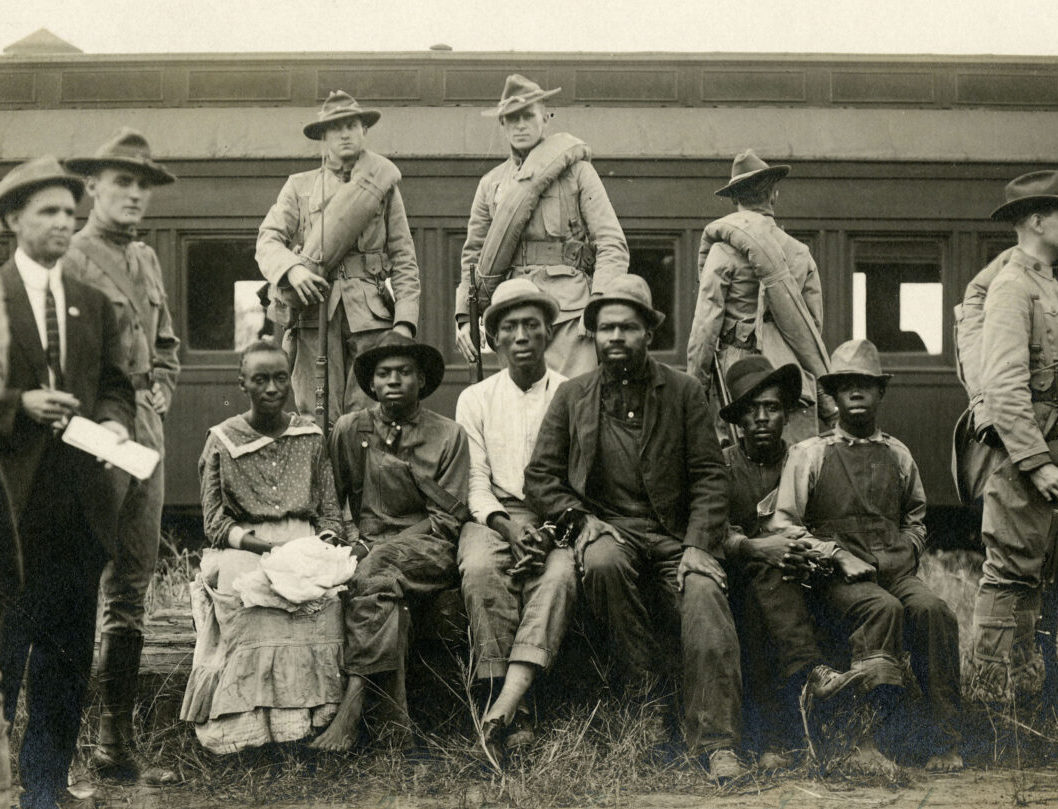
1912: The Forsyth County Expulsion and its Aftermath, a production of the Atlanta History Center and WABE, takes an extensive look at the history of Forsyth County, its 75-year stretch of being nearly all white and the memories shared through descendants of the Black residents, among others.
September 1912 was a fraught period wedged between the Atlanta Race Massacre of 1906 and the 1915 reorganization of the Ku Klux Klan. Mobs of White residents in Forsyth County, Georgia, about 40 miles northeast of Atlanta, forced Black residents out. They made death threats, burned homes and churches, killed livestock and otherwise terrorized the 1,098 Black residents until there were none left except the handful who worked for White farmers in the southern end of the county.
“I think in any community, it can be hard to acknowledge that something so traumatic and horrible happened,” said Sophia Dodd, a Forsyth County native and digital storytelling research production manager at the Atlanta History Center. “But from my experience of talking to a lot of people, especially the descendants [of the Black people expelled], there’s an eagerness to know what happened.”
Dodd’s research spurred the podcast, which is narrated by WABE’s Rose Scott. It highlighted different aspects of 1912 in five episodes and culminated in a November 18 live recording of a discussion moderated by Scott at the History Center. The discussion aired as the sixth and final episode.
Discussion panelists included Dodd; Monica Goings, a researcher at Clark Atlanta University; and descendants of the Black families expelled from Forsyth County: Chase Evans, Charles Grogan and Elon Osby.
Their stories and photographs are beautifully laid out in the History Center’s visual vault, which will remain on display in the center’s atrium. There are also digital components that share hours of descendant interviews and map the areas where Black families lived.
It’s a stark contrast to years of systemic erasure of a close-knit Black community.
1912 tells a story of displacement that Black communities know too well. It’s a harrowing listen. But the podcast format, Scott said, allows people to take a break as they absorb the information.
The expulsion began with an accusation — a centuries-old, violence-inciting tactic of racism that relies on the societal hypersexualization of Black people.
Rob Edwards was arrested for the accusation, then later dragged from the jail by a White mob, then beaten and hanged while they took turns shooting at his limp body.
Over the years, the story of the expulsion has been told through other media, but the county and state have been slow to acknowledge or atone. A historical marker about Edwards’ lynching was erected on the Cumming square in 2020. But two years later, Gov. Brian Kemp outlawed the teaching of such incidents in Georgia schools, signing the bill into law just a couple of miles from the area that carries Edwards’ memory.
Such gestures continue to stoke some descendants’ unease with returning to one of Georgia’s infamous sundown towns — even through the 1980s, Black people were shot, chased away and harrassed if driving through or working in the county. But groups like the Fulton County Reparations Task Force and the Community Remembrance Project of Forsyth County, which spearheaded the marker, are working to change that.
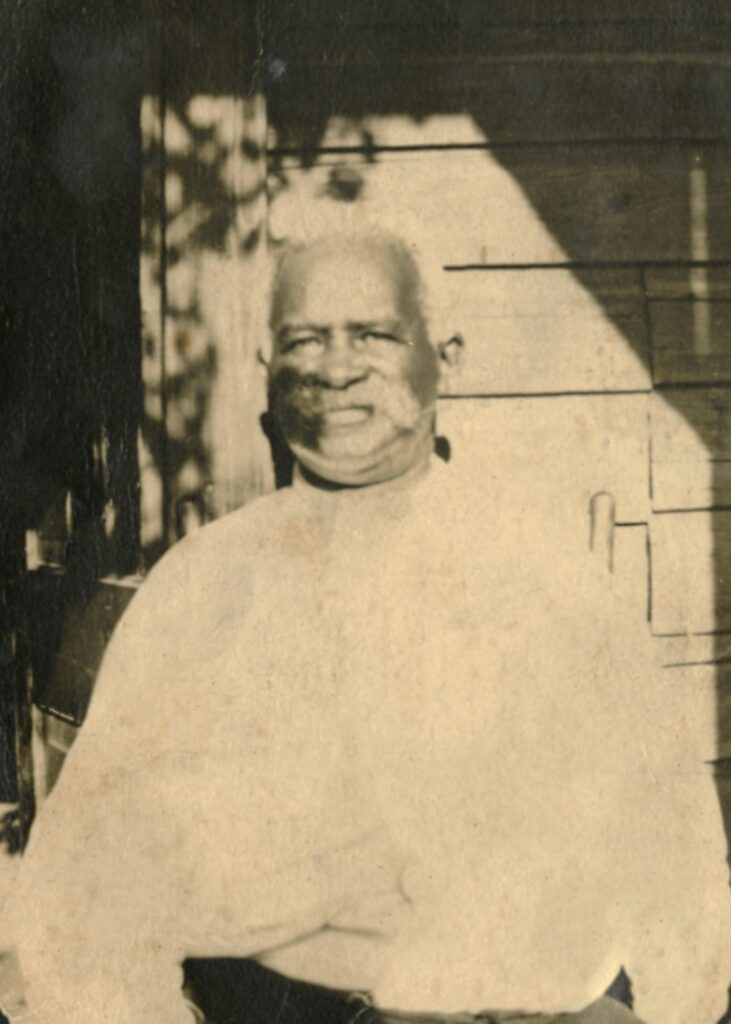
The descendants heard recollections of 1912 through their families, but recent years have given them greater understanding.
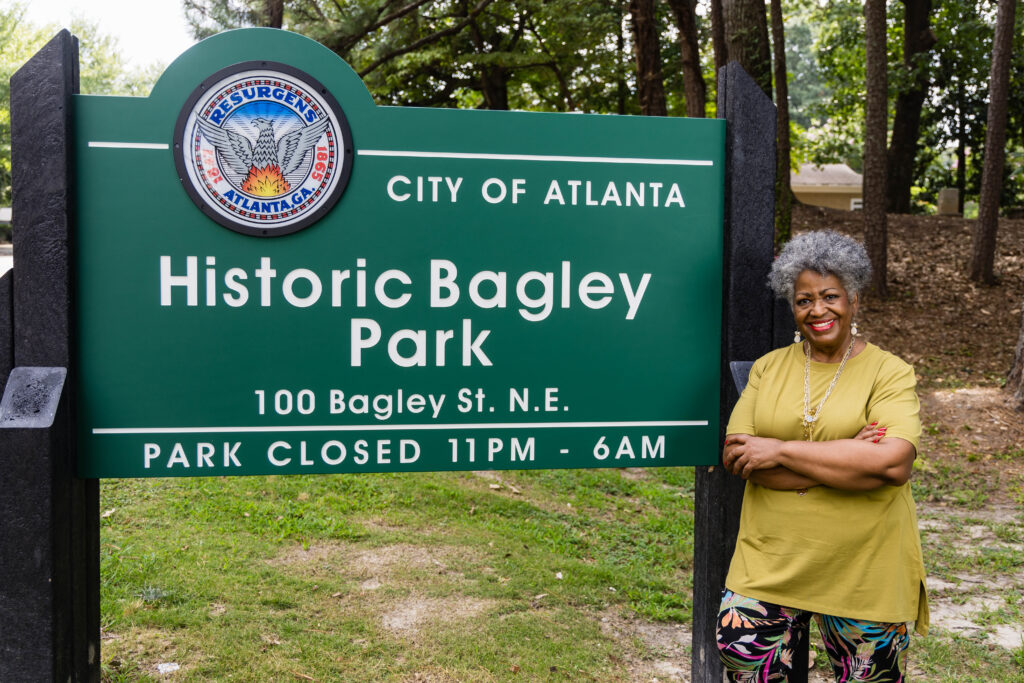
“No one in my family had been back to Forsyth County since they were forced out; they were afraid to go back,” said Osby, who grew up on the West Side of Atlanta after her parents moved from Buckhead’s bygone Bagley Park, named for her grandparents William and Ida Julian Bagley. She learned more when her mother did an interview in the 1980s. Then, in 2007, she returned to the place that had interrupted her family generations ago.
Osby and her brother walked the land that her grandparents once owned during that visit. The Bagleys weren’t able to recover their 60 acres, like most of the exiled Black landowners who had to abandon their land or sell it at a huge loss.
Research by the Fulton County Reparations Task Force, which Osby joined in 2023, shows that her grandparents’ land would be worth more than $3 million today. With Lake Lanier came major development along Georgia State Route 400, making Forsyth County one of the wealthiest counties in the United States today.
Many of the descendants wonder how their families would have impacted the area if they hadn’t been banned. They’ve had gatherings and hope to gain traction in their fight for reparations.
“I used to say, ‘No, I don’t want anything,’ but I’ve gotten over that,” Osby said. “I do not want to go to Forsyth County and take somebody’s house because that would make me no better than the ones that took my grandfather’s property.”
But reparations from the state of Georgia, the city of Cumming and Forsyth County would be a start, Osby says.

For Grogan, who has become his family’s historian, part of “healing and closure to me is just telling me the truth.”
For Evans, a recipient of the Forsyth Descendants Scholarship, it is healing to simply remember his great-grandmother, Leola Strickland Evans.
“I think the healing and closure came from the fact that her life was an inspiration to future generations that things can change,” Evans said. “She never let herself become closed off by the forces that sought to keep her down. That carries over. Even with people that never had the opportunity to meet [her], I see her love still living on in them. And that’s so powerful to me.”
::

Angela Oliver is a proud native of old Atlanta who grew up in the West End. A Western Kentucky University journalism and Black studies grad, daily news survivor and member of Delta Sigma Theta, she works in the grassroots nonprofit world while daydreaming about seeing her scripts come alive on the big screen.
STAY UP TO DATE ON ALL THINGS ArtsATL
Subscribe to our free weekly e-newsletter.

PLEASE SUPPORT ARTSATL
Your Gift Sustains the Coverage You Count On!
Related Posts