Giwayen Mata keeps the spirit of Kwanzaa alive through dance
Movement. Sisterhood. Culture. Connection. Growth.
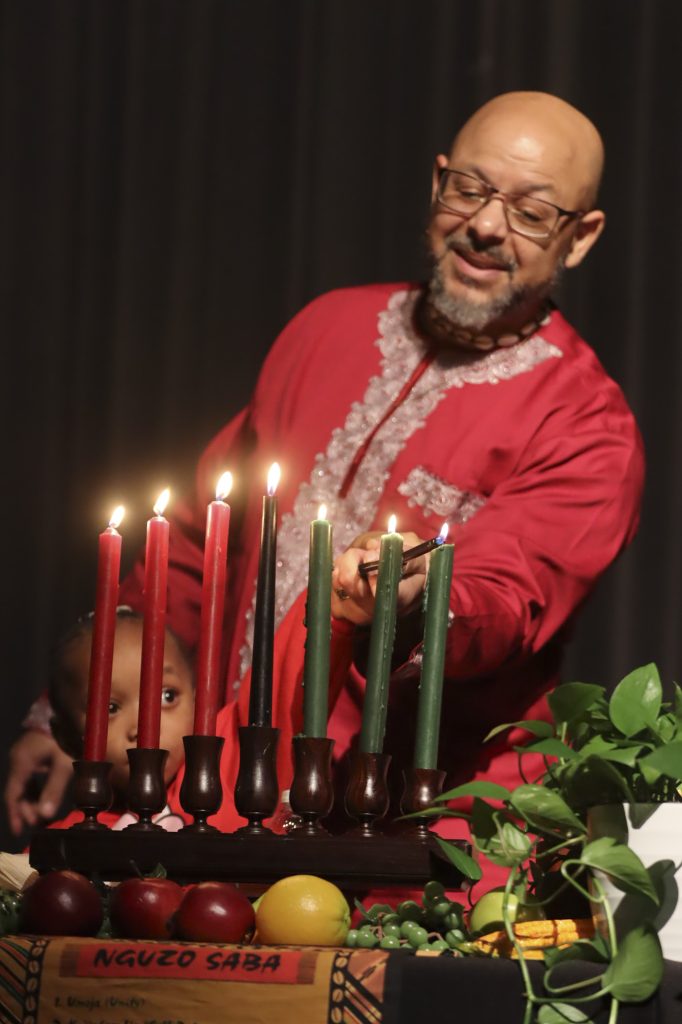
When asked what brings her back to Giwayen Mata year after year, choreographer Lindiwe Famodou responded with these five tenets. Giwayen Mata is an all-women dance, percussion and vocal ensemble dedicated to the preservation and perpetuation of African diasporic culture through community and artistic expression. The ensemble is currently preparing for the annual return of its flagship program, Kwanzaa Freshii, which will hit the stage for its fourth consecutive year on December 30. Giwayen Mata has been producing the Kwanzaa program for over 15 years, and now with Kwanzaa Freshii it has continued its focus on engaging new generations through collective dance and music
According to History.com, the Kwanzaa holiday was first created in 1966 by Dr. Maulana Karenga, a professor and chairman of Black studies at California State University, Long Beach. As the Black power movement was gaining traction, Dr. Karenga began to search for ways to address the societal inequities Black Americans continued to face in the post-Civil Rights era. After researching the spiritual practices and beliefs of various countries on the African continent, Karenga landed on a seven-day celebration rooted in gratitude and hope. Kuumba is one of the seven principles of Kwanzaa, and, although the Kwanzaa program takes place at the end of the year, Giwayen Mata certainly embodies Kuumba all year long.
Originally conceived as community jam sessions, Giwayen Mata was officially formed in 1993 by founding members Omelika Kuumba, Osunlade Fatunmise, Sarahn Henderson, Ife Hendricks, Sauda Jackson-Bey, Shalewa Mackall, Andrea Richards, Ramatu Sabbatt and Ama Tyus. Today, their legacy continues under the creative direction of Artistic Director Tambra Omiyale Harris.
Harris is an Oakland, California, native but has called Atlanta home for the past 33 years. She attended Clark Atlanta University and received formal dance training at Spelman College. Watching her at work during a recent Giwayen Mata rehearsal, it is clear that Harris takes Giwayen Mata’s mission to heart. She is a teacher, a mentor and an artist. During the rehearsal with the ensemble, there was a quiet power about her stage presence — a presence that demonstrates what it means to be fully in your body both as a dancer and as a woman. She shared that when dancers first start out, they tend to be a bit more explosive in their movement, but, as they gain more experience, their movements become more fluid and more grounded.
It is also apparent that young people feel safe in the Giwayen Mata ensemble — safe to make mistakes, safe to ask questions and safe to be their authentic selves. “Keeping the youth engaged will help the community as a whole,” Famodou said. She told stories of her own youth, where her mother led an African dance company, and Famodou continues to carry those lessons of community and culture in her work to this day. She has honed her expertise in many aspects of performing arts, from lighting to stage management to choreography.
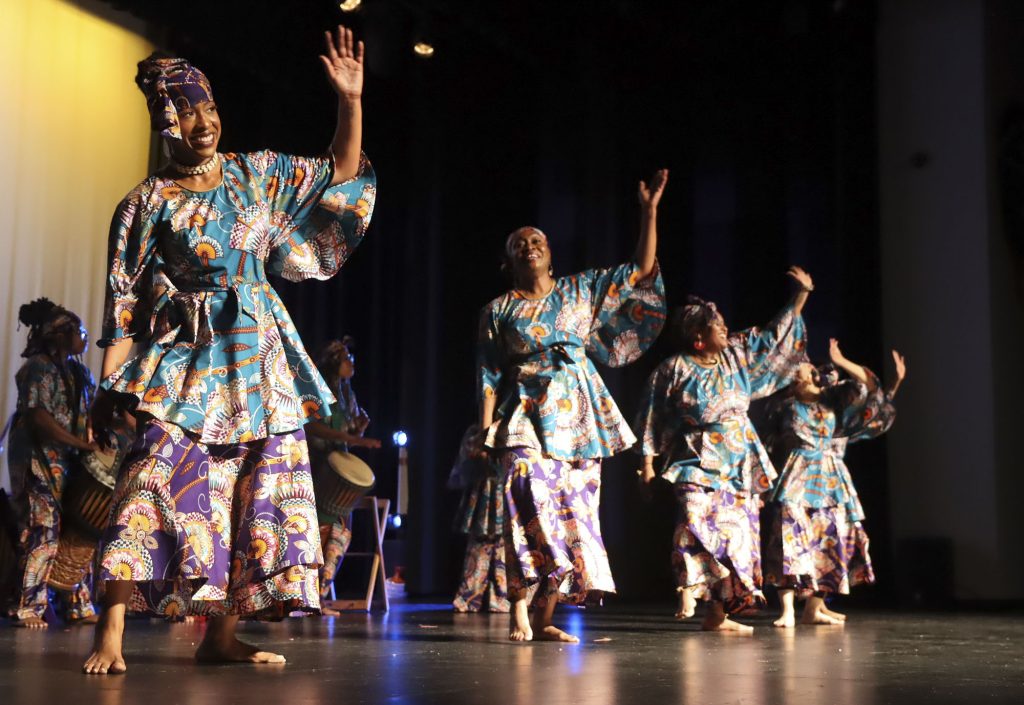
The rehearsal space Famodou curates is one of joy. As dancers worked on the modern Afrobeats section of the choreography, laughter periodically broke out among the performers. I marveled at how each dancer’s unique personality shone through while performing intricate and fluid movements. Though they danced in unison, each body roll, arm extension and footwork was expressed by each body uniquely. Hints of their individual foundational ballet and jazz training influenced how they approached the choreography, yet all moved with a divine air of freedom.
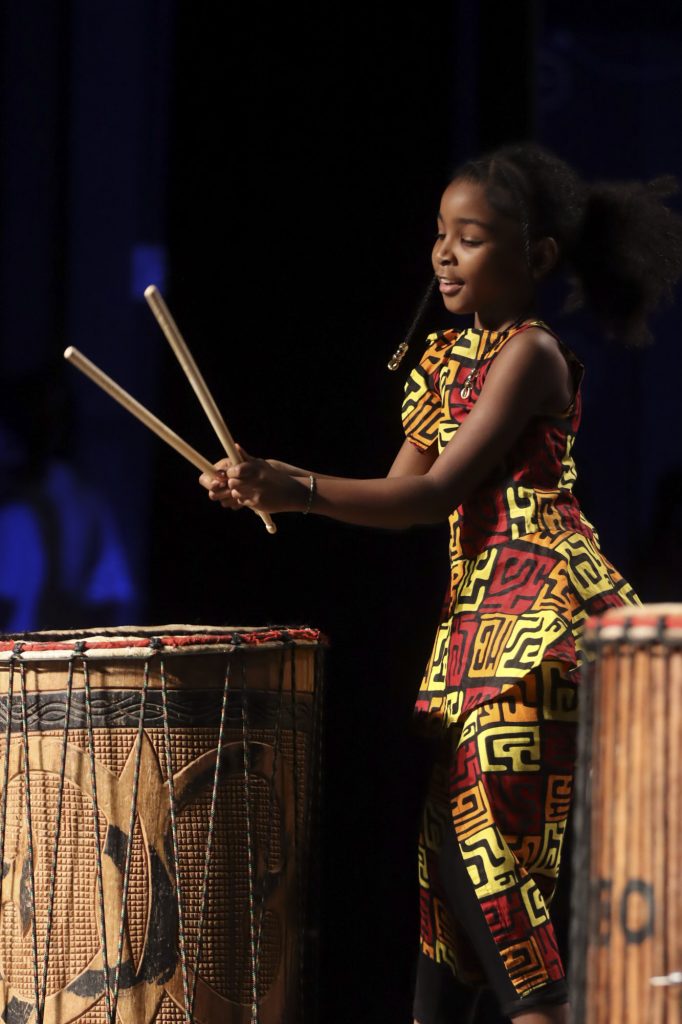
Another unique quality of the Giwayen Mata ensemble is that everyone dances and plays the drums. For one of the larger pieces, dancers start on the drums and end up on the center floor. What is so striking about this dynamic is the apparent inability to hide. Performers actively learn each craft by doing it — there is no warm-up period or time to be timid. During rehearsal, praise and criticism are given in real time, and performers make the adjustments in the rhythm of live percussion. Though correction can be uncomfortable, the Giwayen Mata performers seemed to lean into the correction with the knowledge that their community supports them. These moments reflect umoja, the Kwanzaa principle that pertains to unity.
At the end of rehearsal, everyone formed a circle and shared affirmations. Dancers and drummers alike were once again grounded in the why behind the Kwanzaa Freshii program. Harris described the experience as a homecoming of sorts: To maintain the program’s openness, she allows young people to join even when it is close to the production date.
After the closing circle, Harris recorded a section of choreography for a young woman who promised to be ready to perform by the next rehearsal. “You have to have faith in yourself and in your community,” she said with conviction. What better way to demonstrate that faith than by entrusting young people to make good on their word and add their gifts to the community?



Community. Sisterhood. Culture. Creativity.
These tenets are at the core of what Giwayen Mata is. In the context of engaging young people and instilling in them the principles of Kwanzaa, Marketing Manager Adi Bates said it best: “We’ve got a couple of staples. Lots of community.”
Children, grandchildren, mothers and grandmothers share the same stage. Aunties and big cousins look after the younger children during rehearsals. This is the embodiment of shared language and communal vision that Tambra Harris cultivates. “We’re the first ones,” said Harris. “We have to be responsible for ourselves.”
The women of Giwayen Mata understand that art disarms us; it allows us to be receptive to principles that may seem difficult to grasp at first glance. The Kwanzaa Freshii program is the vehicle through which the greater message of Kwanzaa is conveyed, inviting spectators to gain a new, deeper perspective on Kwanzaa and consider how they can live out these defining principles in their daily lives, long after the curtains close.
Giwayen Mata will present Kwanzaa Freshii on Tuesday, December 30, at 3 p.m. in the Drew Charter School Junior Senior Academy.
::

Joy Liburd studied dance at the Conservatory of Dance and Fine Arts in Decatur. She was a member of the Zankiliwa African Dance Troupe and the Carolina Tap Ensemble during her undergrad tenure at the University of North Carolina at Chapel Hill. Joy taught ballet and tap at Jacksonville Arts & Music School in Jacksonville, Florida. Joy recently completed her master’s program in creative business leadership at the Savannah College of Art and Design.
STAY UP TO DATE ON ALL THINGS ArtsATL
Subscribe to our free weekly e-newsletter.

PLEASE SUPPORT ARTSATL
Your Gift Sustains the Coverage You Count On!
Related Posts