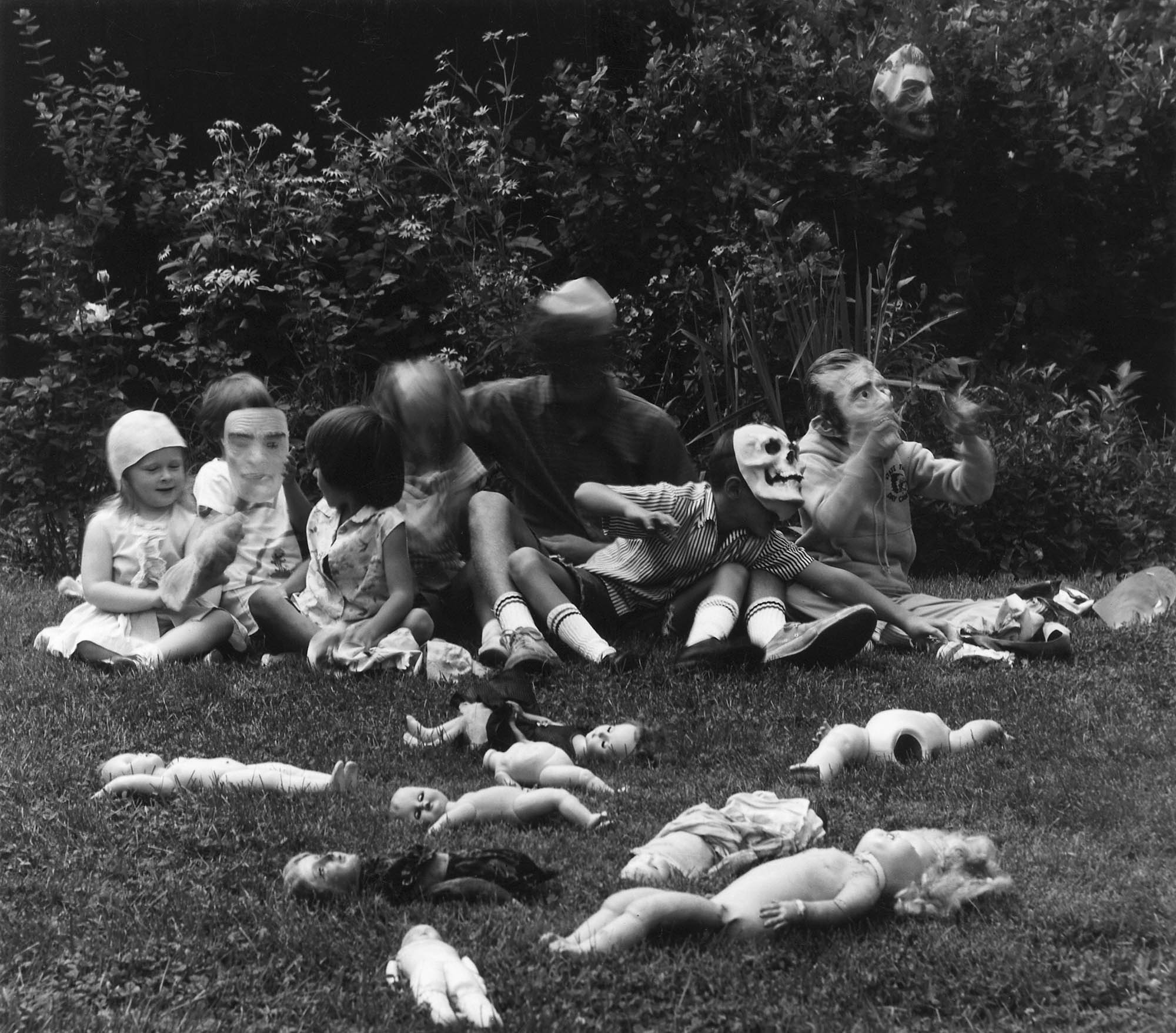
Experimentation beyond the lens: a retrospective of Ralph Eugene Meatyard debuts at the High
“I adhere to the techniques of the earliest and most sincere workers of the camera — straight, unmanipulated pictures. That which I present is that which I see,” Ralph Eugene Meatyard, quoted in Beaumont Newhall, New Talent in Photography USA for Art in America 49, no. 1 (1961).
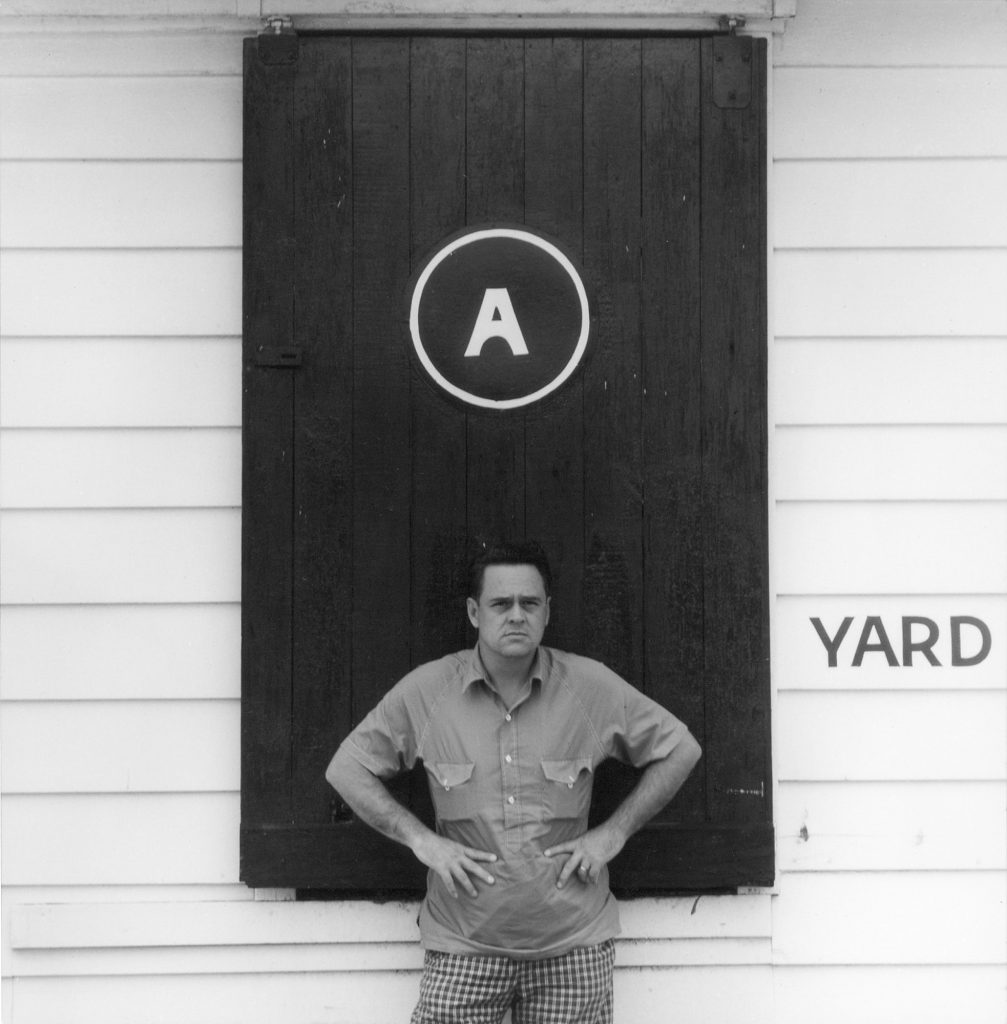
The legendary Ralph Eugene Meatyard (1925-1972) was an amateur photographer, intellectual, professional optician and committed husband and father whose adult life was spent in Lexington, Kentucky. Deeply diving into creative processes and experimentation, Meatyard explored love of family and friends and issues of mortality. Even during his lifetime, Meatyard had begun to achieve national status among fine art photographers for his experimental and expressive work that he described as “romantic-surrealistic.”
The Family Album of Ralph Eugene Meatyard is a celebration of the centennial of the artist’s birth at the High Museum of Art. Debuting the High’s acquisition of a major collection of gelatin silver prints acquired from the Meatyard estate, the exhibition features photographs from the 1970 Gnomon Press monograph eponymously titled Ralph Eugene Meatyard. The High now owns all 36 photographs published in the monograph, including 34 plates, cover and a self-portrait frontispiece.
As an adult, Meatyard lived in the South but grew up in Normal, Illinois — an apt birthplace for this man who led a very normal life. (“Meatyard” is an arcane 17th century English surname, but its surrealistic sound is an apt byline for the photographer. Meatyard himself collected strange names that he noted in a loose-leaf binder.) He did not consider himself a Southerner, although he has often been associated with Southern photography.
Although Meatyard counted himself as an amateur and hobbyist, he exhibited his work nationally with fine art photographers such as Minor White (who introduced him to Zen Buddhism), Harry Callahan, Aaron Siskind and Emmet Gowin. His national reputation had grown enough that his 1972 passing garnered a New York Times obituary that described Meatyard as living (somewhat disparagingly) in a backwater. Yet, it was living outside major centers of art and photography that allowed him the freedom to pursue his idiosyncratic creative strategies.
Trained as an optician, Meatyard moved with his family to Lexington, home of the University of Kentucky, in the early 1950s to take a position with Tinder-Krauss-Tinder optical shop. The business also sold cameras, which is how Meatyard first became interested in photography and its mechanics. He joined and then became a leader of the Lexington Camera Club, whose members were serious “hobbyists” like himself.
Meatyard was also part of the remarkable community of thinkers, writers and artists living in and around Lexington and the University of Kentucky, one of many fertile pockets of intellectual and artistic centers in the South. Among his friends, colleagues and mentors were philosopher and Trappist monk Thomas Merton, photographer and curator Van Deren Coke and novelist and poet Wendell Berry.
Meatyard primarily created his idiosyncratic images by camera manipulation, rather than through darkroom techniques. (He took nearly 2,000 photographs a year but only developed film once or twice a year.) Among his strategies were long exposures and the use of shallow depth-of-field settings. Other times he moved his camera to create a whirling abstract sense of motion or made double exposures.

Ralph Eugene Meatyard (American, 1925–1972), Untitled (cover),1962, gelatin silver print. Estate of Ralph Eugene Meatyard. (©Estate of Ralph Eugene Meatyard.)

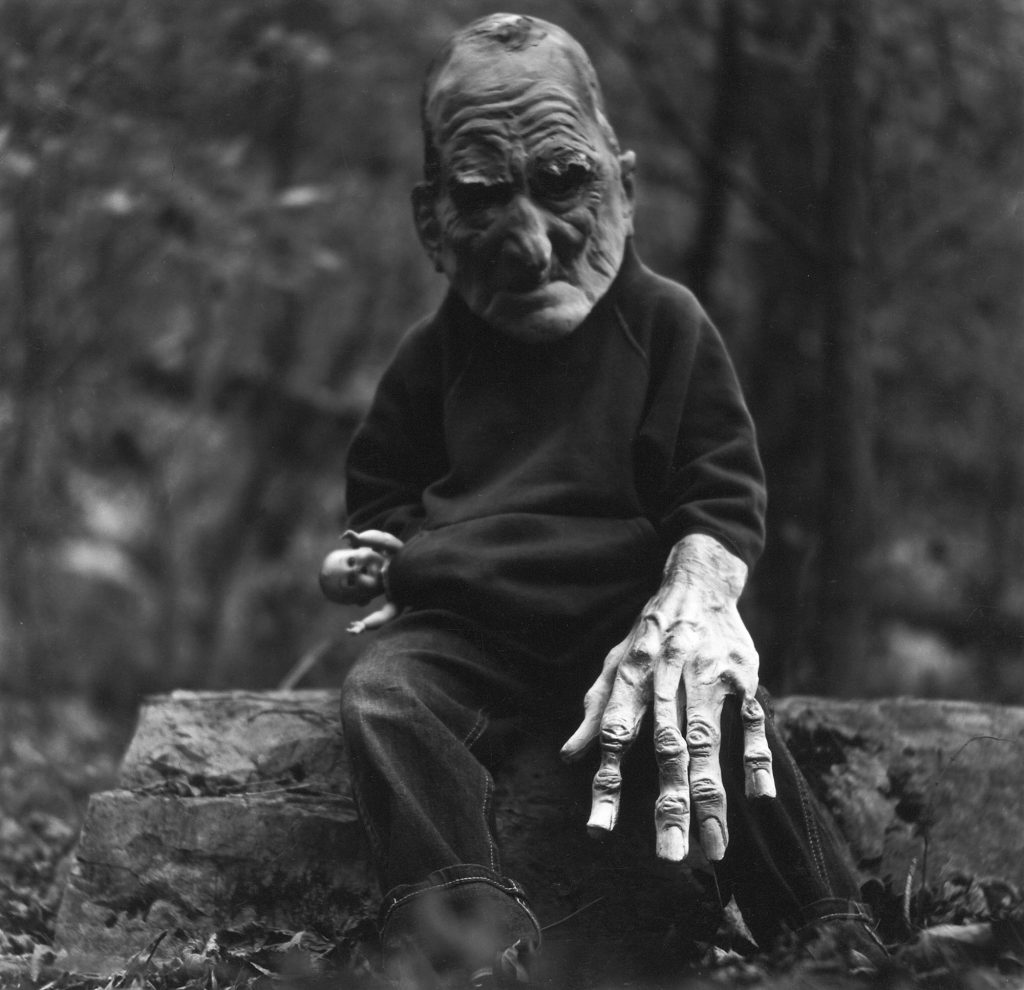
silver print. Estate of Ralph Eugene Meatyard. (©Estate of Ralph Eugene Meatyard.)
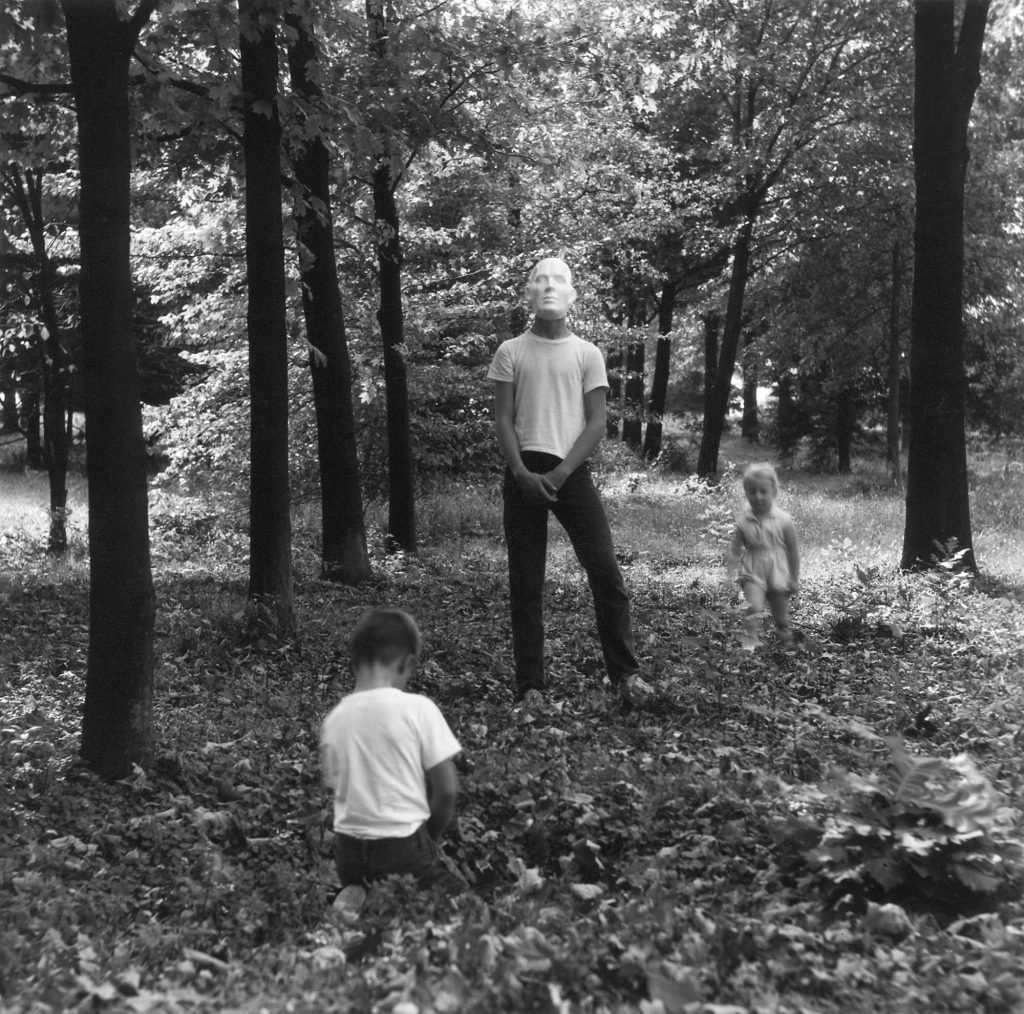

After he was diagnosed with terminal cancer in 1970, Meatyard proposed that Gnomon Press (a small literary press still operating in Lexington) publish a monograph of his work. He had long grappled with issues of mortality, having suffered a heart attack in 1961. Meatyard himself selected these legacy images, which he considered among his best, and edited their placement in the monograph.
Two-thirds of the images are photographs of Meatyard’s wife, two sons and daughter. Referring to them as his “romance series,” they are among his most iconic and well-known photographs. Using a 2¼” Rolleiflex camera, he staged his experimental photographs in abandoned homes and natural settings around Lexington. He stored props in the trunk of his car, including dolls, dime-store masks and gnarly hands, from which he would create tableaux that commented on aging and the fragility of life. The photographs are funny, peculiar and poignant.
The photographs of his friends are more straightforward but equally poetic and surrealistic. An example is his portrait of close friend and fellow Lexington Camera Club member Cranston Ritchie (1923-1961). Like Meatyard, Ritchie received an untimely terminal cancer diagnosis, resulting in multiple amputations of his arm. Facing forward, Cranston stands with an armless mannequin and mirror, a humorous but tragic take on fate and mortality.
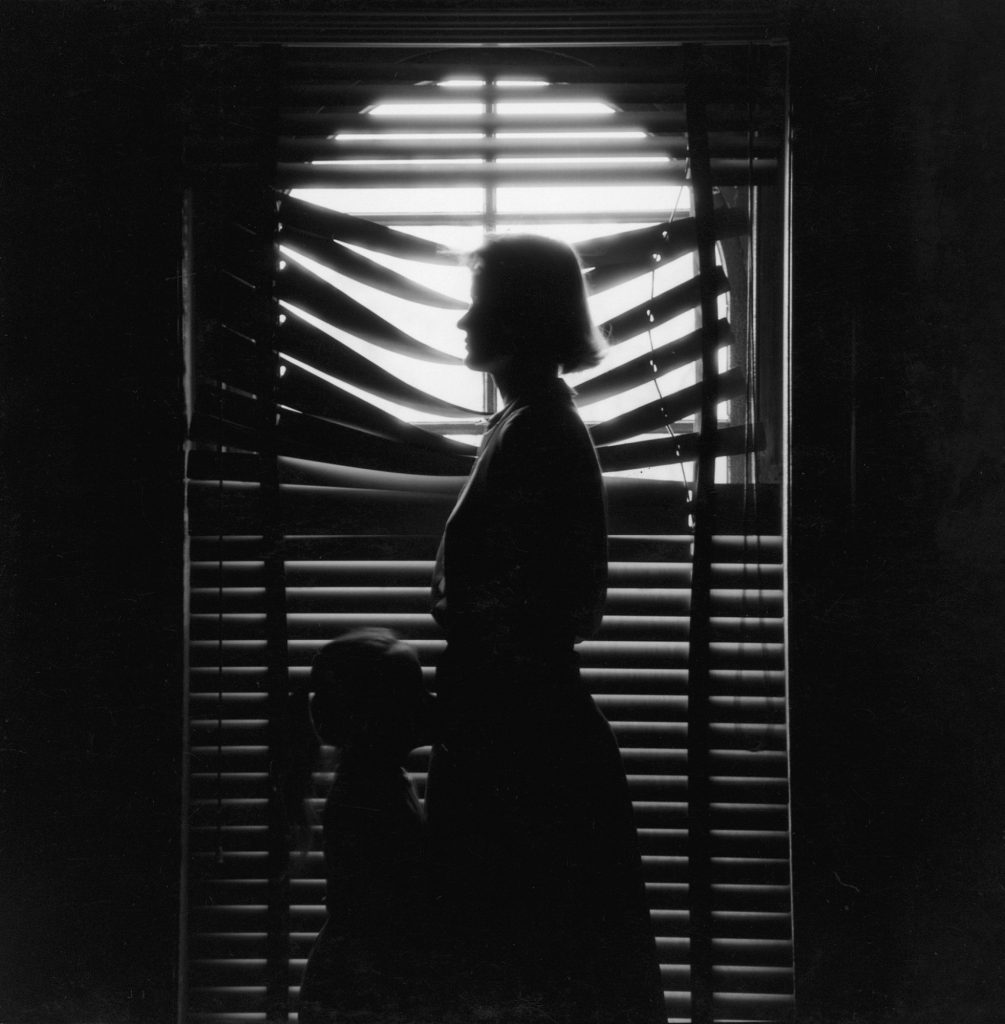
A particularly beautiful image is the final photograph of the monograph/exhibition: Meatyard’s wife and daughter are silhouetted against an arched window with bent blinds and shadowed walls. He poignantly referred to the image as “Madonna.”
The exhibition is not so much curated as organized by the High’s curator of photography, Greg Harris, who aptly expanded the exhibition’s title to The Family Album of Ralph Eugene Meatyard. Harris has written insightful texts and has installed Meatyard’s typically small gelatin silver prints in the monograph’s sequence.
The Meatyard estate has also lent archival support materials. One case includes documents that offer insight into the monograph’s development and distribution, including a handwritten outline titled “MASKS, STORIES, PEOPLE & OTHER PHOTOGRAPHS.” The second case contains poetry and philosophy books from Meatyard’s personal library.
Overall, through this monograph and now this exhibition, Meatyard reveals his perception of his art and thought processes in the face of his mortality. There is a sense of pathos, as well as a sense of a life well-led. Meatyard is in the gallery with us.
A final note: During Meatyard’s lifetime, a tightly-knit group of serious fine art photographers working across the United States strove to elevate photography as a creative art form. Few American museums collected photography — The High launched its collection in the early 1970s. Meatyard was able to engage with this network, not only because of his talent and original vision but also because the creative photography community was small, intelligent and open-minded.
This Meatyard acquisition, along with 17 additional gelatin silver prints donated by the Meatyard estate, has established the High as a major repository of the photographer’s work. This strategic acquisition reflects and re-affirms the High’s now 50+ year commitment to photography.
::

A curator and arts administrator, Louise E. Shaw has long been interested in photography. She wrote her MFA thesis for Syracuse University on the High Museum of Art’s photography collection.
STAY UP TO DATE ON ALL THINGS ArtsATL
Subscribe to our free weekly e-newsletter.

PLEASE SUPPORT ARTSATL
Your Gift Sustains the Coverage You Count On!
Related Posts