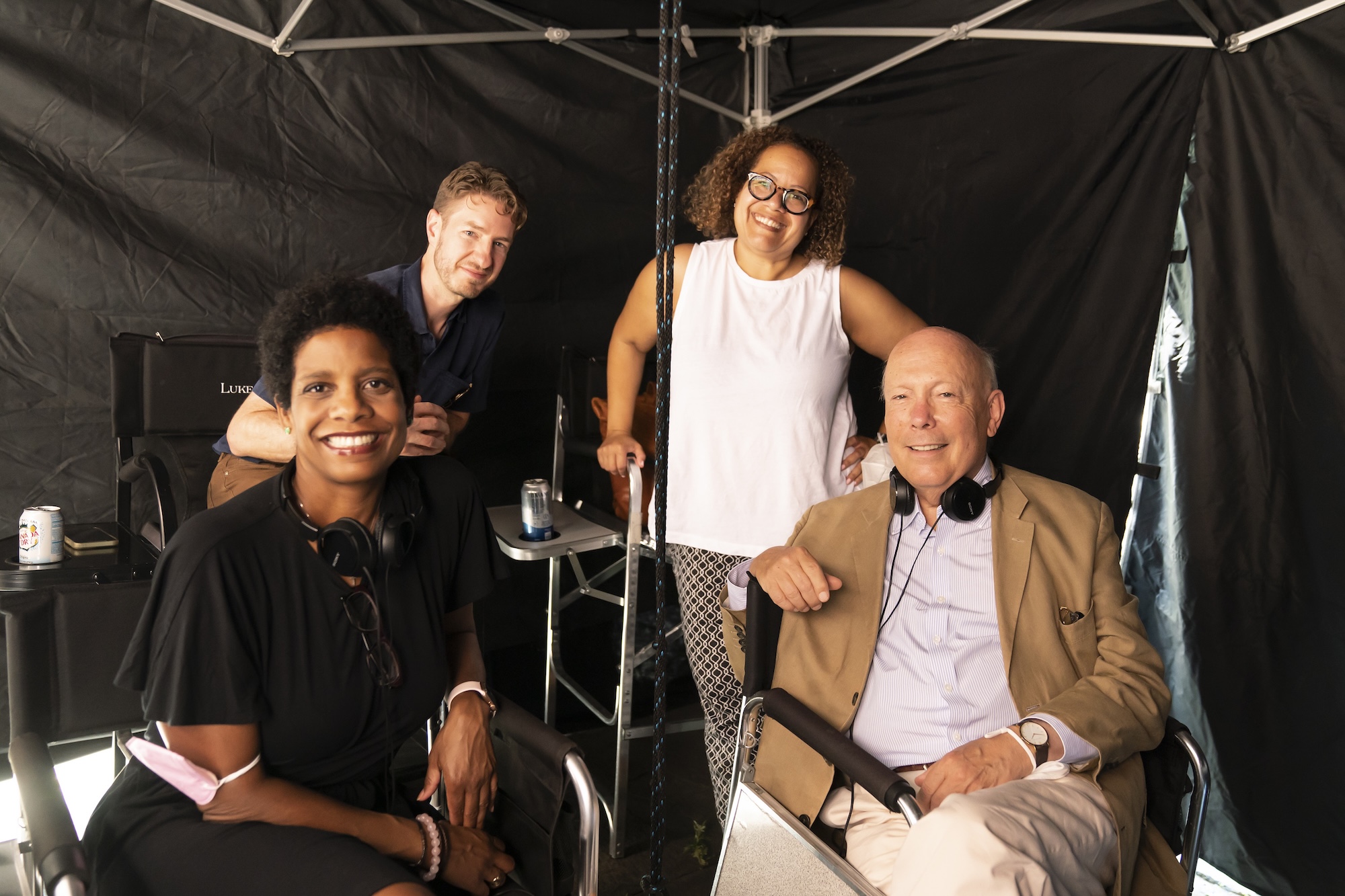
Emmy-nominated ‘The Gilded Age’ has an Atlanta connection
Co-Executive Producer Erica Armstrong Dunbar, who’s among the Emmy nominees at this year’s awards ceremony next week, is a department chair at Emory University.
::
Erica Armstrong Dunbar, Emory University’s chair of the Department of African American Studies and a National Endowment for the Humanities history professor there since 2024, heads into this weekend with another key distinction. She is Emmy-nominated for her work as co-executive producer of HBO’s delicious period piece The Gilded Age, up for Best Drama.
She said in a recent interview that her work in acclaimed television still surprises her.
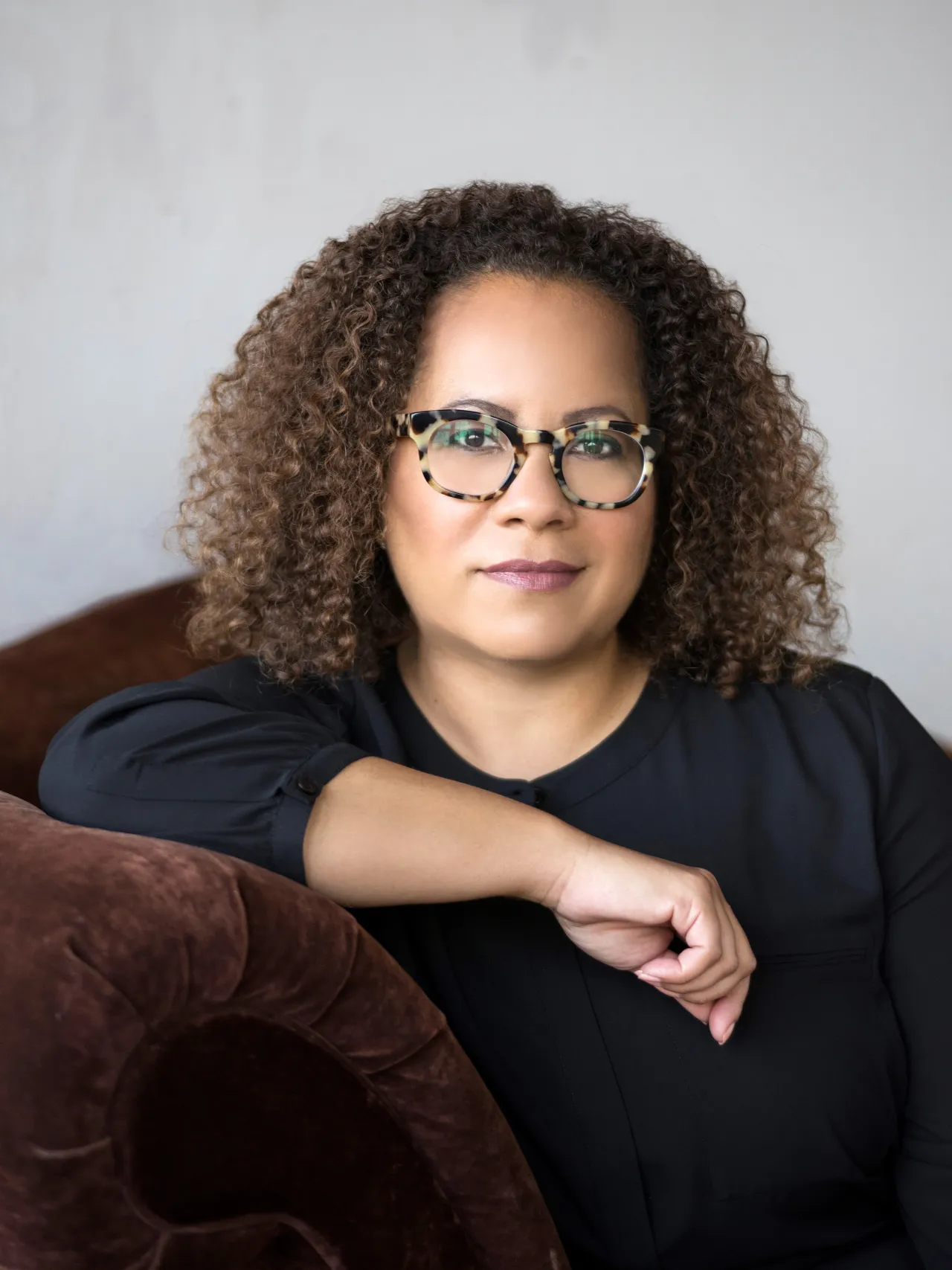
“If someone had asked me 10 years ago if I imagine myself as a co-EP on an HBO show, I would’ve laughed,” Dunbar said. “I’d always been involved in documentary work but not scripted television in this way. And I think what it’s done actually for me — as a scholar, as a writer and also as a lecturer, thinking about my job as a professor — working on the show reminds me of the importance of good storytelling. And that if it ain’t on the page, it ain’t on the stage.”
History resonates by bringing human experiences into focus, she said.
Julian Fellowes created The Gilded Age after his success with Downton Abbey, focusing on a distinctly American historical moment. Dunbar, an expert in 19th-century African American women’s history, was brought onto the show as a consultant in 2019 while the project was in development at NBC. She was promoted to co-executive producer during its first year.
Though much of the drama centers around the neighboring families of the Van Rhijns and the Russells, who represent old New York society and the nouveau riche robber barons who clashed in the 1880s, a key character named Peggy Scott — played by Broadway star Denée Benton — illuminates the experience of affluent Black people in New York during that time.
Her backstory originally shrouded in secrets, Peggy works as a secretary for the stuffy, stubborn Agnes van Rijn (Christine Baranski) while aspiring to become a writer, similar to the ambitions of the real-life figure Ida B. Wells. In the first season, it’s revealed that Peggy is the estranged daughter of a well-to-do pharmacist, Arthur (John Douglas Thompson), and his wife Dorothy (Audra McDonald), upstanding members of Brooklyn’s Black middle class.
This reveal also served to inform viewers about a little-known chapter of African American history, Dunbar said.
“I joke that Sunday night at 9 is the biggest classroom I’ll ever have,” she said. “I hope that people walk away entertained but maybe feeling a little bit smarter.”
Though some of Peggy’s revealed history contains tragedy, The Gilded Age makes a conscious effort not to wallow in darkness that might be triggering to viewers.
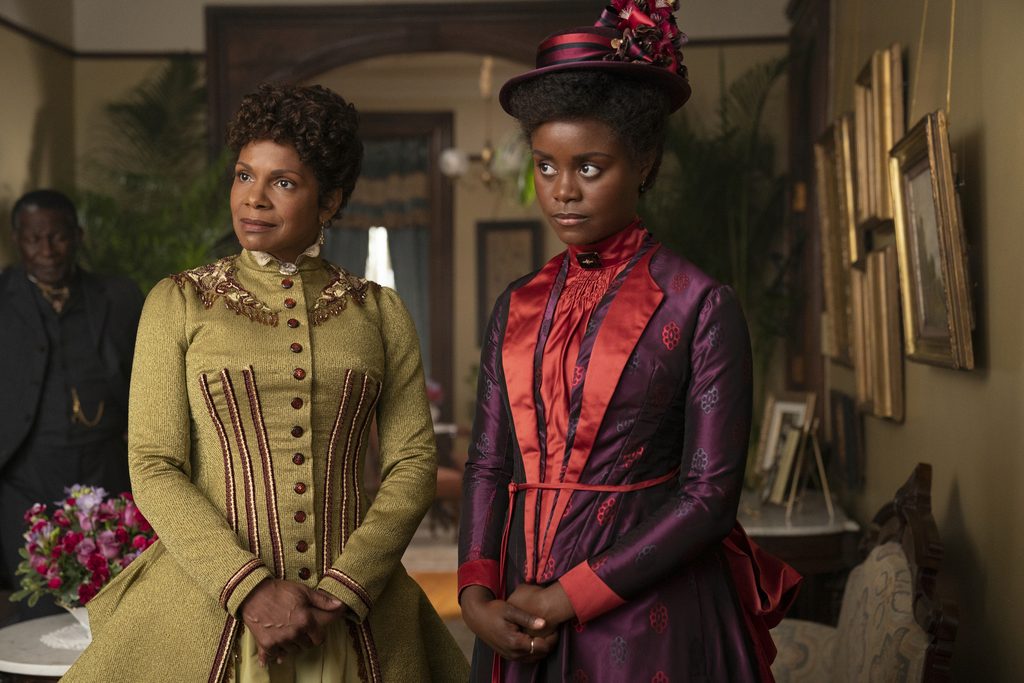
“One of the things that’s very unique about this show is that we get to see a different version of Black life, something we haven’t seen on television before,” Dunbar said. “If we do see Black life in the 1880s in film and television, it’s usually a Southern story, maybe sharecropping. And while that’s an important part of the American narrative, one of the things that was very interesting about the show was that we got to do something different. And while it focuses on New York and a kind of Black elite experience, I think that what we’ve managed to do is to show that, yes, life was still full of indignities for Black people, even those of wealth or means in the North, in a place like New York, but that along with those indignities came great joy, triumph, love, forgiveness — all kinds of things that you can also see in our white characters. So there’s a way that we get into the interior spaces of these characters that give, I don’t know, I’d like to think a more nuanced, a complex understanding of what life was like in the 1880s for Black folks.”
In the show’s second season, Peggy began working as a journalist for The New York Globe alongside T. Thomas Fortune — one of many real-life historical figures who appear on the show. She also traveled to the Tuskegee Institute and interviewed Booker T. Washington.
“We made the decision to go to Alabama because, with our show, we focus on a small subset of Black people of wealth in New York, but the majority of Black America did not live like that. And so it was important, I think, to Julian, to Sonja Warfield, one of the other writers on the show, to be able to step out of New York in order to remind our viewers how different Black New York, Brooklyn in particular, was from the rest of America. And that was only 20 years removed from the Civil War.”
But the show did bring Peggy home from those dangers. And in the third season, Peggy was given a joyous, romantic story that paired her with William Kirkland (Jordan Donica), a doctor who treated her pneumonia.
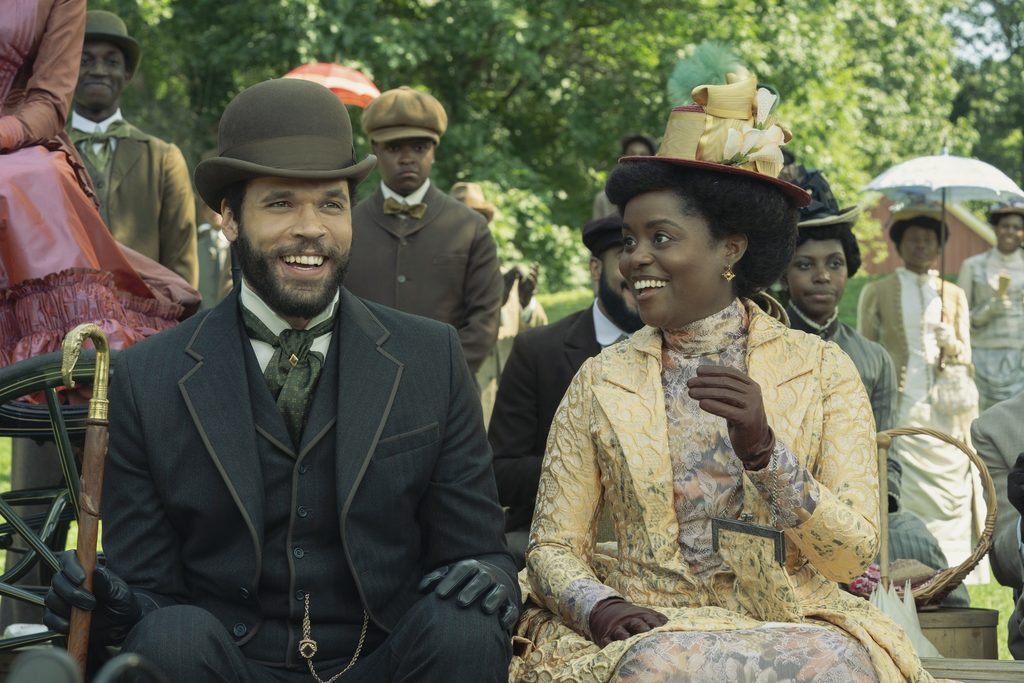
“Last season we were really committed, especially thinking about Peggy’s storyline, to focus more on joy,” Dunbar said. “This show reflects that, even in the darkest of moments or where you’ve been down and you think you’re never going to get over something, things can change. And in some ways, it’s aspirational. It makes you go out. It maybe stokes the hope, and I think that intention was felt by our viewers.”
Conflict did arise during the romance, though, because of Kirkland’s mother, Elizabeth (Phylicia Rashad), a Newport, Rhode Island, society matron who disapproved of Peggy’s past, her lineage and her skin tone.
“Here was, I think, an intentional offering of more real estate for this storyline in particular, but to also create a space in which we could investigate, interrogate some of the intra-racial tensions within the Black elite in the North,” Dunbar said. “We wanted very much to be able to dive into their lives and some of the very real frustrations and to be very honest. The sort of carryovers of institutionalized racism from that affected Black folks, such as preferring lighter complected people or making assumptions about them that there was less of or no attachment to a history of slavery.”
The Gilded Age’s fourth season is set to premiere November 1, and there are possible wedding bells for Peggy and a change in the fortunes of William Kirkland to contend with — after he acted to save the life of a millionaire in the finale.
Dunbar said she could spoil nothing about the new season, though she did find it funny that some viewers turn to Wikipedia to determine what happened in real life to Ida B. Wells and the Vanderbilt family — a model for the Russells.
“We try not to stick to the script all of the time,” she said. “But Julian Fellowes holds historical accuracy, or should I say authenticity, to a high regard. Julian is quite good at allowing history and fiction to marry.”
The Emmys will be presented live on September 14 on NBC. Dunbar is excited for her show.
“It’s just a beautiful recognition of a lot of hard work by a team of people who care deeply about the show, and so it buoys the spirits of everyone,” she said. “But I think we go into every season not necessarily for the Emmy noms or ratings numbers. I think we go in trying to make good television and making certain that our stories are rich and that our characters are as engaging as they were the season before, if not more so.”
::

Benjamin Carr is an ArtsATL editor-at-large who has contributed to the publication since 2019 and is a member of the American Theatre Critics Association, the Dramatists Guild, the Atlanta Press Club and the Horror Writers Association. His writing has been featured in podcasts for iHeartMedia, onstage as part of the Samuel French Off-Off Broadway Short Play Festival and online in The Guardian. His debut novel, Impacted, was published by The Story Plant.
STAY UP TO DATE ON ALL THINGS ArtsATL
Subscribe to our free weekly e-newsletter.

PLEASE SUPPORT ARTSATL
Your Gift Sustains the Coverage You Count On!
Related Posts