Atlanta filmmaker explores the value of the city’s tree canopy in ‘The Tree Economy’
It’s among the many documentaries screening at the Atlanta Documentary Festival this weekend.
::
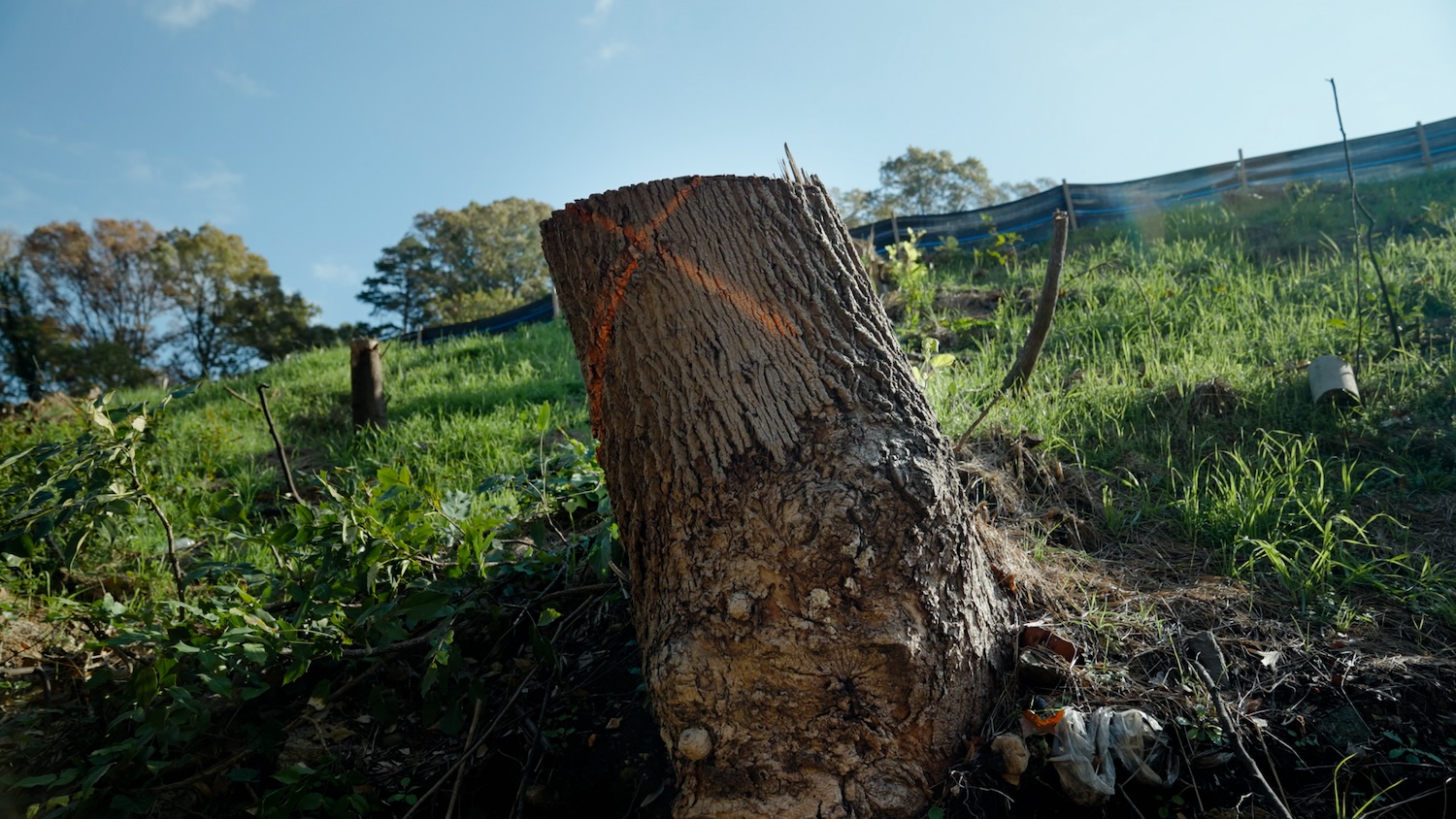
Trees in Atlanta have a public relations problem. They don’t get as much credit for the good deeds they provide to us as they should. Even worse, our tree canopy is inexorably shrinking — it is estimated that close to half an acre of trees are lost each day, mostly to urban development.
Not even a year has elapsed since the Atlanta City Council passed a new tree ordinance that was meant to address the two conflicting issues: a severe housing crisis and a declining tree canopy. To most observers, it failed to calm the fiery debate.
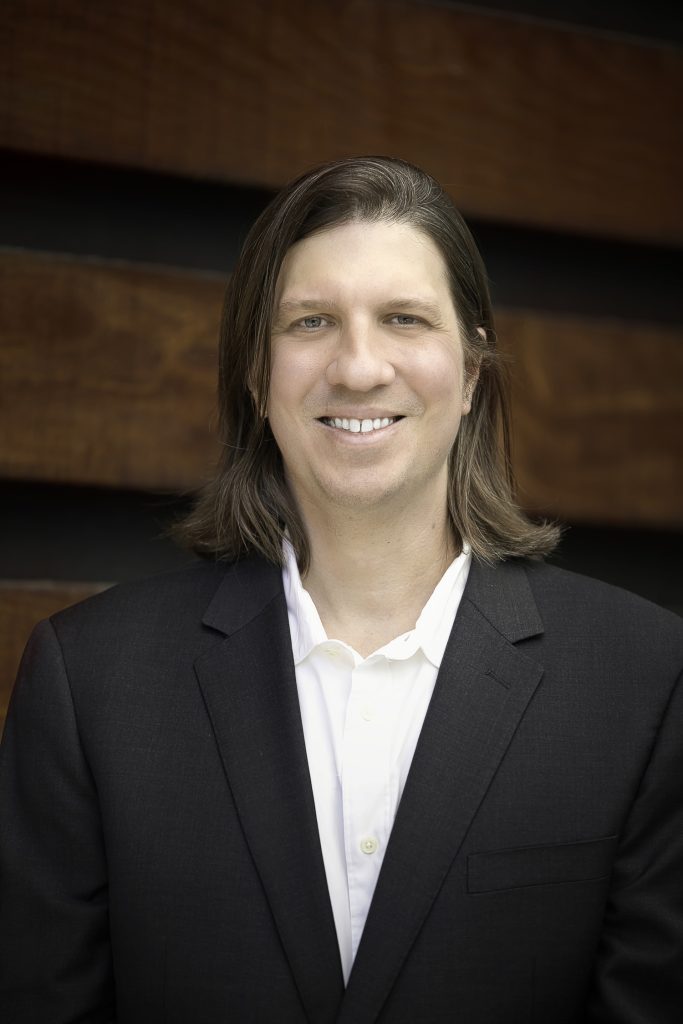
James Schroeder.
This is why the recent release of James Schroeder’s long feature The Tree Economy is both timely and pertinent. A freelance film producer and DP editor based in Atlanta since the early 1990s, Schroeder has had no history of being an environmental filmmaker. His first feature-length film Nicole is a horror movie that reached a large audience.
So how do you go from the horror genre to the environmental beat? In a recent interview, Schroeder shares that he has long been at awe with the sheer number of trees in Atlanta, and he felt for the loss he witnessed over the years. But for all the clear cuts that have been made in the last decades, there was one that particularly touched his heart.
“There was a couple of acres, a young forest … pretty untouched, right behind Target on North Druid Hills Road, where it crosses with Briarcliff Road. It was very unique, really awesome,” he remembers. One day, driving by to take his preschool daughter to school, he saw a sign popping up. “I originally thought they were going to put townhomes, which would have been bad, but at least it would be for housing people. Instead, they put in a self-storage facility. And that was when I just lost it. It just broke me.”
What resulted was a drive to dive deep into what he calls the economy of trees. What is a tree value? How does it compare with the economy of urban development? And what are the consequences for a city like Atlanta to lose its tree canopy?
After spending five years researching and conducting more than 50 interviews on his own dime, Schroeder came up with a 102-minute-long feature film that explores the complexity of this issue with nuances and thoroughness. The film will be screened during the Atlanta Documentary Festival on March 22 at 1 p.m. at Synchronicity Theatre.
Although openly vocal about his personal feelings on tree loss in the city, Schroeder wanted to offer a healthy balance of opinions. In truth, the film features a wide range of voices from both sides of the debate, but not in equal numbers: Developers, urban designers and city planners make the case for the urgency to face the current housing crisis, but, more predominantly, ecologists, environmentalists, arborists and plain citizens express their concerns over the urgency to better protect our natural assets. Schroeder notes that the city of Atlanta’s Mayor’s Office, Department of City Planning and Arborist Division, as well as all tree removal companies’ representatives he contacted, declined to be interviewed, a signal that the topic remains a heated subject in the city.
To tree advocates’ point, there is no shortage of information about the alarming state of Atlanta’s tree canopy, and the documentary dutifully references all the scientific data that have emerged in the last decade. The most authoritative one is a 2018 study led by researchers at Georgia Tech, which found the city’s canopy had declined by roughly 1.5% from where it stood in 2008. But, since then, the pace of canopy decline surged even more. According to an AJC report, from July 2021 to June 2022, some 24,000 trees were removed or were tagged for removal — and almost 19,000 in the year prior. “Those years were the top two for removals in the last nine years.”
This sense of urgency and timeliness is what gives the documentary its weight. As urban designer Ryan Gravel notes ironically in the film, “We all love our trees. We talk about them all the time, but we don’t actually protect them. That could be frustrating.”
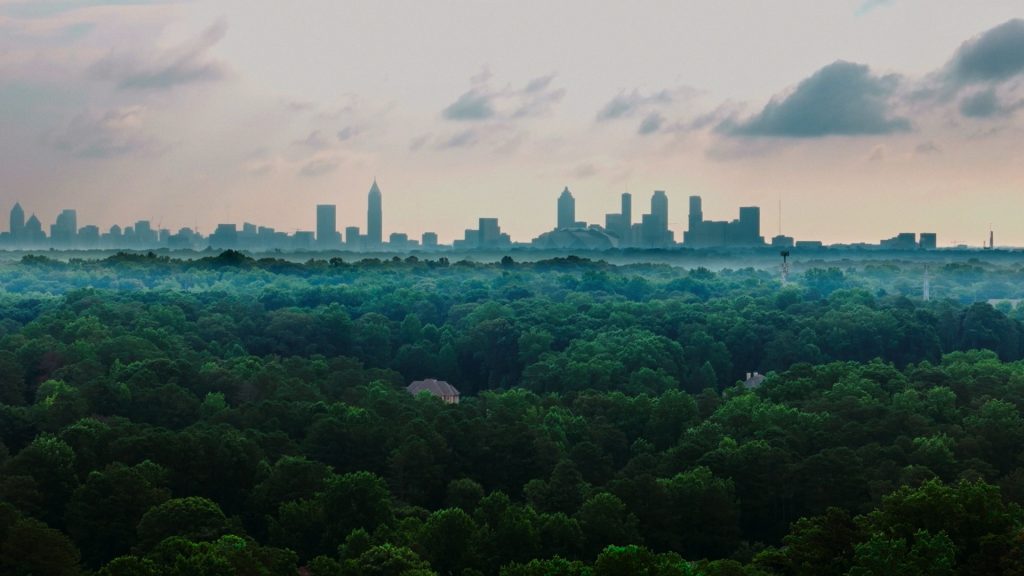
Frustration is an understatement in the comments of a large number of Schroeder’s interviewees. They make the case for all the catastrophic events that go wrong when we lose our trees, such as flooding, river bank erosion and increasing heat exposure. Schroeder includes raw footage of such happenings that confirm that the city is already experiencing real effects over the loss of its tree canopy.
Yet, land developers and city planners offer a dead ear to most arguments, citing the inevitability of urban growth and the need to address affordable housing. The fact that the vast majority of Atlanta’s tree cover is on private, residential property — about 84% of the city’s canopy is on land zones for single or multifamily residences — makes it also vulnerable to development. Schroeder explores a few consensual alternatives to large-scale developments, such as the village conservation concept, where 50% of the land remains undeveloped. Despite its appeal to meet both the development paradigm of density and land conservation, the model remains marginal throughout Atlanta.
As Schroeder was finishing to line up his last interviews, the decision to build a public safety training facility nestled in the trees of the South River in southeast Atlanta — infamously known as Cop City — showed up. Schroeder said the controversy was unexpected. He felt compelled to cover the issue, interviewing both sides, politicians and city officials as well as activists and youth organizers, leaving viewers with an open question: Would the controversy have been less violent had the city of Atlanta decided to choose a different location?
It would be unfair to say that the documentary fails to come up with a clear answer to the question of the economic value of a tree. The tree compensation rate — the value assigned to the cost of replacing a tree of the same species — is the source of a heated debate, and it often comes short of estimating the true benefit of mature trees, for instance. Assessing the value of nature — in terms of dollar value — is challenging, if not impossible, because many environmental goods and services do not have a clear price in the market. But where this documentary clearly succeeds is in dissecting all the forces at play and forcing us to imagine a better future for the city. Because, as Atlanta City Council Member and fervent tree advocate Liliana Bakhtiari notes, “We don’t have a choice. “
Where & when
The 21st annual Atlanta Documentary Film Festival will offer new documentary shorts and features from emerging and established filmmakers, along with Q&As and filmmaker mixers and parties at Synchronicity Theatre from March 19 through March 22. The Tree Economy screens at 1 p.m. March 22.
::

Virginie Kippelen is a photographer, multimedia producer and writer specializing in editorial and documentary projects. She has contributed to ArtsATL’s Art+Design section since 2014, writing mostly about photography — and, after living 25 years in the United States, she still has a French accent.
STAY UP TO DATE ON ALL THINGS ArtsATL
Subscribe to our free weekly e-newsletter.

PLEASE SUPPORT ARTSATL
Your Gift Sustains the Coverage You Count On!
Related Posts