City of Lawrenceville asks Aurora Theatre to pay up for LAC stage usage
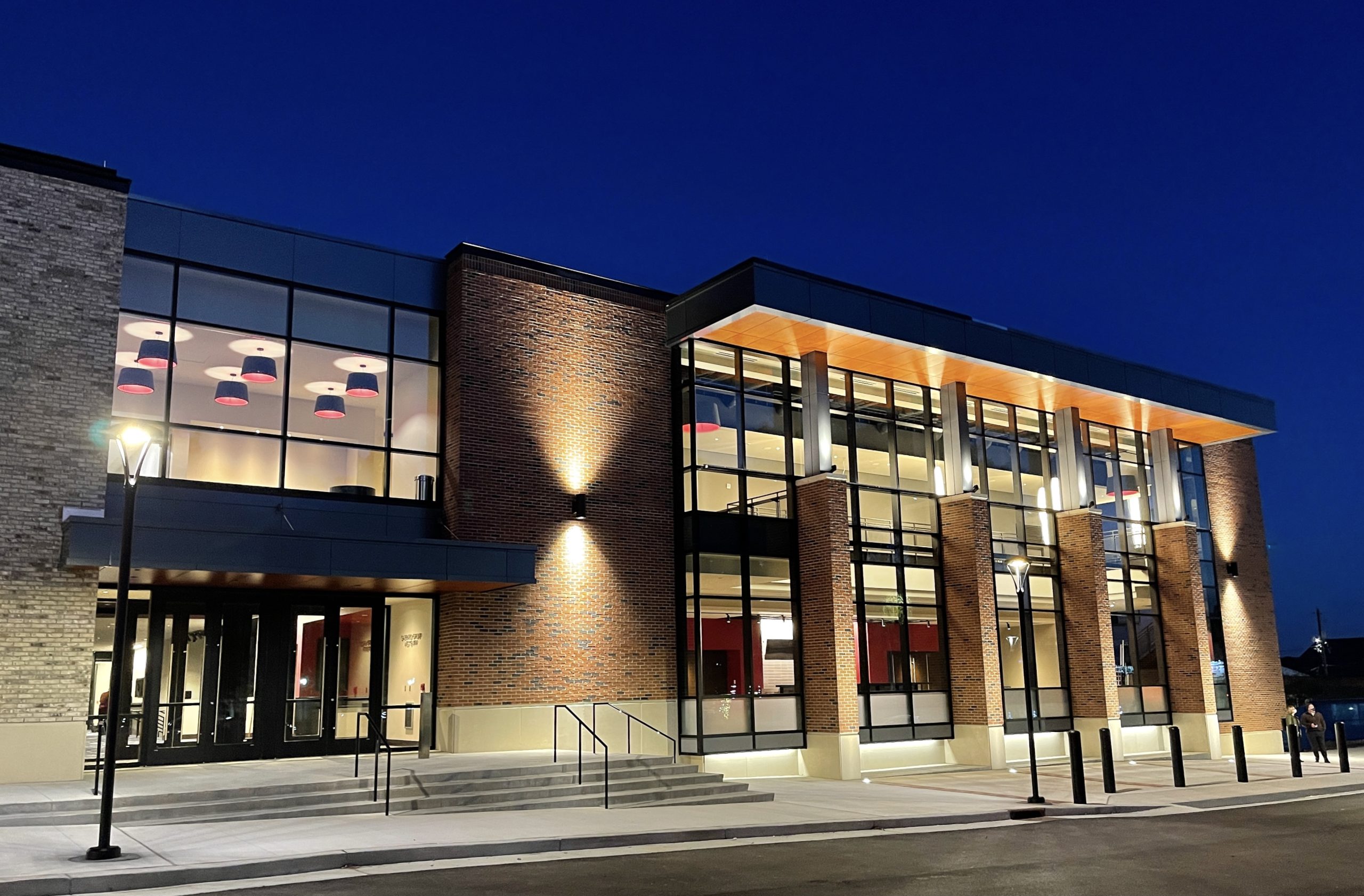
When the Lawrenceville Arts Center officially opened in 2021, it seemed like a harmonious moment for the city, Aurora Theatre and the community. The $35-million facility was built to give the Aurora a larger home, offer up more programming and boost economic development in the area. Yet, new city-imposed requirements for the theater company have put a strain on the relationship between the two parties.
The original agreement was that Aurora would remain as resident theater company and handle the programming for the LAC, as well as areas such as patron services, technical services and third-party rentals. In July 2025, however, the city decided to take over operations of the complex, leaving Aurora handling box office and technical duties. Those talks started at the end of 2024.

“There was a lot of discussion, and the decision was not made lightly,” says Jasmine Jackson, the community and development director for the city of Lawrenceville. “We agreed that Aurora does great programming and incredible educational programs. But we wanted to take the operations off of their plate so they could focus on what they do really well while the city takes care of the operations of the total facility and takes the financial burden off of them.”
In its previous location adjacent to the LAC, known now as the Bobby Sikes Fine Art Center, Aurora Theatre — which opened in 1996 in Duluth before moving to downtown Lawrenceville in 2007 — did not pay a monthly rental fee. That arrangement continued once the LAC opened. Aurora co-founder and Producing Artistic Director Ann-Carol Pence recalls that the original agreement with the city was $1 for rent — and that it wouldn’t be a burden on the city. Aurora did, however, have to produce a minimum number of shows per year and pay occupancy fees but had full programming autonomy.
Once the LAC opened, the agreement was that Aurora would operate the facility and contribute $4.5 million in good faith for expansion fees. The company signed an agreement for 20 years and asked for that entire time period to make the contribution — but was given five years.
According to Pence, the city’s earliest statements to Aurora in 2019 were that funding for the LAC would be a combination of city and private partnerships with Aurora and Georgia Gwinnett College. Ultimately, though, the board of regents did not approve GGC’s involvement and it never happened. Jackson was not part of those initial talks with the city, but, from her understanding, Aurora said it was open to be a fundraising partner as part of the capital campaign to raise money for the LAC. Its commitment was to raise $5 million to support the expansion, a number that was later whittled down to $4.5 million.
Since July, Aurora has been asked to pay rental fees for the various stages it wants to utilize. According to Jackson, the city offers discounted rental fees for the spaces, which includes large stages at the LAC — the Clyde & Sandra Strickland Grand Stage and the Metro Waterproofing Main Stage — and the original Bobby Sikes theater. Those rates are 40% off for all of Aurora’s produced shows and 70% for all educational programming.

“Previously, that cost was not considered,” says Jackson. “Now, as per our operations agreement as it currently stands, that cost is something they have to consider for their upcoming events. We work with them and have a lot of different arrangements.”
Christina Hamilton, Aurora’s interim executive director, says the company had been working under the agreement that it would have access to the Grand Stage when needed without a rental fee. Producing The Wiz in the late summer of 2025, however, added more than $100,000 to its expenses, she says. Likewise, when the company produced a version of A Christmas Carol in the LAC’s Cabaret Stage during the recent holiday season, the amount accumulated through ticket sales didn’t cover the stage rent, and Aurora ended up upside down.
According to Jackson, programming for the facility is now handled by both parties instead of solely Aurora.: “It’s a mixture. They still handle all of their own producing and educational programming; that has not been taken away. They can do anything they want to do in the space.”
She now has a team under her, including the complex general manager, who will also handle LAC programming.
It’s up to Aurora, Jackson says, to determine where each of its shows will be held. According to Hamilton, for the newly-announced 2026-2027 season, only Annie will be staged on the Grand Stage because of the rental fees.

Hamilton says Aurora has had to move shows to smaller stages because of the new rent, yet the company has filled the LAC at an 80% capacity the last two years, fulfilling contractual agreements. With the city now having its hands on programming, Hamilton says the campus is often empty, and Aurora’s attempts to collaborate with partners on projects for stages that would otherwise be vacant have been rejected.
When patrons have inquired why productions originally earmarked for the Grand Stage are on smaller stages, company statements and emails have gone out from Mya Burns, who works in patron services for Aurora, explaining its side.
The emails state that the theater wishes it could produce in the LAC as much as it has in the past but because of “significant and sustained increases in occupancy expenses, including rent costs that now represent over 40% of the theater’s annual revenue,” Aurora Theatre is unable to program the majority of season 31 on the Grand Stage at the Lawrenceville Arts Center. The letter also says the theater is in a precarious situation with the city of Lawrenceville.
Jackson says she has heard from a few patrons herself about the situation but mostly about what the new agreement looks like. “We have not, that I am aware, received a lot of negative feedback from that email beyond our internal staff discussing that it is not appropriate. We pay for patron services, and we want to make sure what is going out is factual. That patron email was not a good reflection of the partnership, and we were very sad to see that.”
She is aware that Aurora does feel the rates are exorbitant and has mixed feelings about the operating agreement but says the city has worked hard in the last year to get to a point that she feels both parties can work with.
In August of last year, the city announced that Daniela Estevez had been appointed as the complex general manager of the LAC. In the press release, it was mentioned that the city had taken over operations of the LAC but there was no official announcement about the fact before and after. According to Jackson, the team is still hiring people in the Communications Department and working on all the information needed to get that information out to the public.

According to Jackson, a March 17 meeting between the city and Aurora to talk about the leasing agreement and the operational agreement, which can be re-opened each year, was a productive one, but she says the city is waiting to hear back from Aurora on certain matters. At that meeting, Pence says Hamilton asked to return to the old lease but the city would not agree to that and expressed a proposal to take over Aurora’s bar and box office. “It was not a negotiation — these are the revenue streams they now intend to take over,” says Pence.
In the eyes of both Pence and Hamilton, the meeting was a setback.
“My hope was that the city would understand the economic and community development value of having an occupied business here that happens to be a nonprofit,” says Hamilton. “That we are increasing foot traffic along the corridor and [they would] make some concessions and offer some incentives to keep a business like Aurora in place, not displace us. After the meeting, it became very clear that what the city values and how they want to use the space is to turn it into a profit center. Those ambitions are in conflict with the mission of a nonprofit.”

Hamilton says the city only wants Aurora to program blockbusters. “They only want us to do high profile events that draw 6,500 to 10,000 patrons — and they want us to compromise on our quality by having shorter load-in times.”
Pence feels Aurora has kept its end of the guarantee, and the city is trying to take every revenue stream it can. “There is no compassion left here. It’s made me immeasurably sad to know my naivete and need to try and connect with the community has ultimately been the undoing of this organization. We brought all those people to the city, and now Jasmine said it best — they are looking for the most lucrative deal.”
For Pence, the situation feels comparable to what is happening at The Kennedy Center. “We are literally watching a similar event. Every time I see current events about the Kennedy Center, how it was taken over and not favorably, it was a hostile takeover. And that is exactly what we are going through.”
::

Jim Farmer is the recipient of the 2022 National Arts and Entertainment Journalism Award for Best Theatre Feature and a nominee for Online Journalist of the Year. A member of five national critics’ organizations, he covers theater and film for ArtsATL. A graduate of the University of Georgia, he has written about the arts for 30-plus years. Jim is the festival director of Out on Film, Atlanta’s LGBTQ film festival, and lives in Avondale Estates with his husband Craig.
STAY UP TO DATE ON ALL THINGS ArtsATL
Subscribe to our free weekly e-newsletter.

PLEASE SUPPORT ARTSATL
Your Gift Sustains the Coverage You Count On!
Related Posts