
A decade-and-a-half later, Atlanta’s makerspaces adapt, survive, thrive
The 2010s witnessed a flourishing of the collective artisan ethos in Georgia, with makerspaces hanging out shingles around the state. Modeled after late ’90s hackerspaces, envisioned as nonprofit communities of artists and fabricators — places to work with your hands alongside like-minded creators — these communal workshops and their memberships swelled, only for COVID and financial realities to set in. In a decade, makerspaces in Athens, Atlanta, Columbus and Savannah had opened and closed.
But three Atlanta-area workshops have persisted. A fourth, percolating since 2011, opened its doors in 2022. United in their focus on creation and education but carving their own niche in the metro, they may now stand as proof, per Faulkner, that the spirit of the makerspace will not merely endure but prevail.
Freeside Atlanta

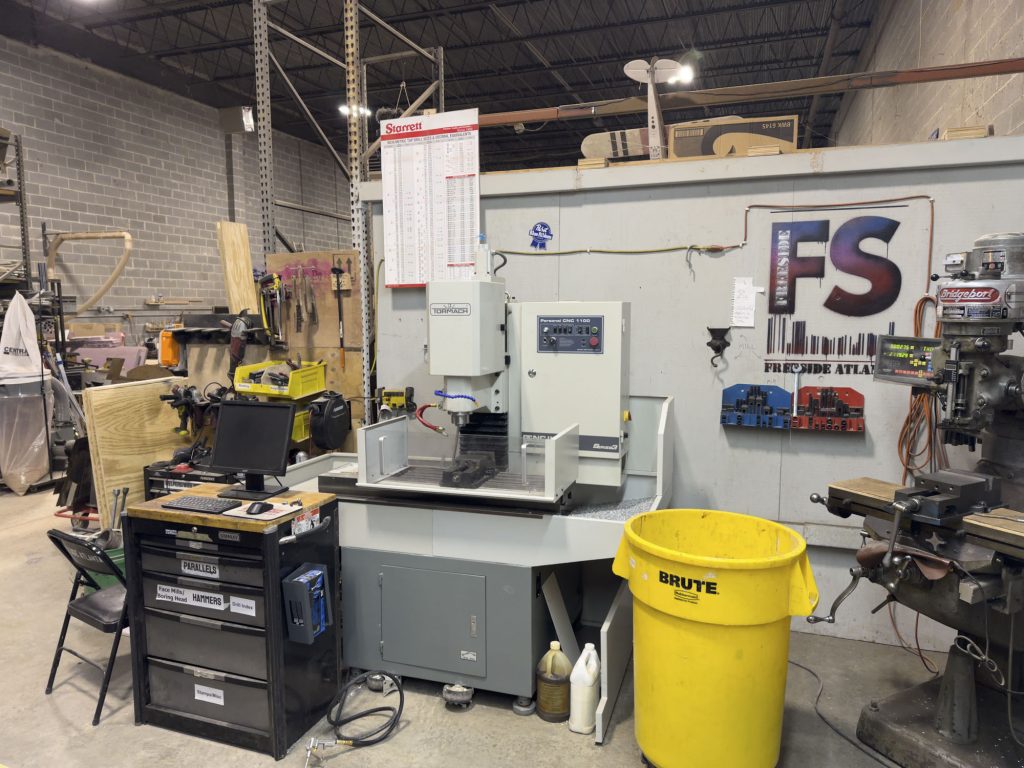



Freeside Atlanta takes its name from William Gibson’s Neuromancer, the 1984 novel that defined the cyberpunk genre. Gibson’s Freeside was an outpost — a bit edgy, a bit Wild West and open to all. Those who come here are free to be themselves.
“We want people [visiting Freeside] to know we aren’t the cool kids. Or if we are, then you’re a cool kid, too,” said Mary Peabody, vice president of Freeside.
Atlanta’s original makerspace, Freeside has enjoyed an optimistic childhood since it was established in 2009, though it later suffered isolation and a nearly fatal dose of Covid in its adolescence, then moved locations shortly after the pandemic to its current spot five minutes from the airport. It now basks in the experience and beatitude of middle age (though the average member remains mid-20s to early 30s).
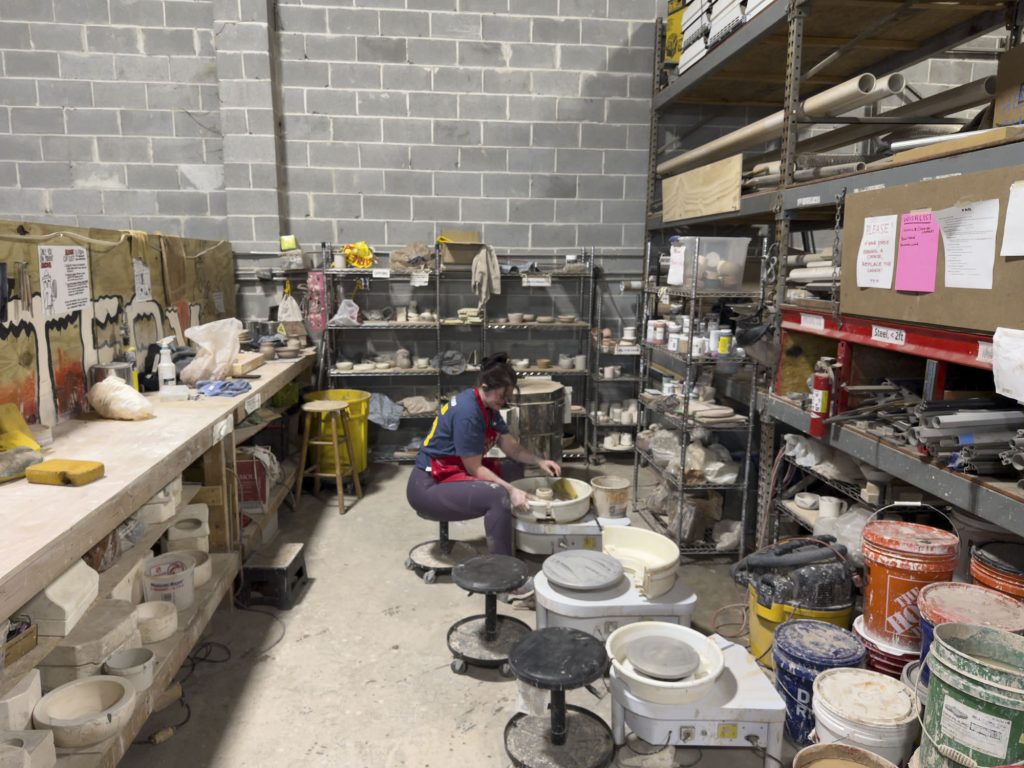
For $80 a month, members have 24-hour, 365 days a year access to a kiln, forge, wood shop, 3D printer, metal fabrication bench, textiles and jewelry making apparatus, plus an electronics table, all housed within its 9,000 square feet — along with thousands upon thousands of tools.
It’s the kind of space that responds to the “I want this in my house but it doesn’t make sense to have in my house” circumstances that can arise among creatives, Freeside Treasurer Kevin Fink said.
Today, Freeside prospers. Membership has tripled in the past three years and holds at around 200 at any given time. But Freeside’s hard-won success — in 2020 it limped out of the Met with 30 active members — required more than adding power tools and square footage. Its meetup group that was started in 2016 has grown to 9,000 members and has proven indispensable, and, with a little ingenuity, it has opened all kinds of doors.
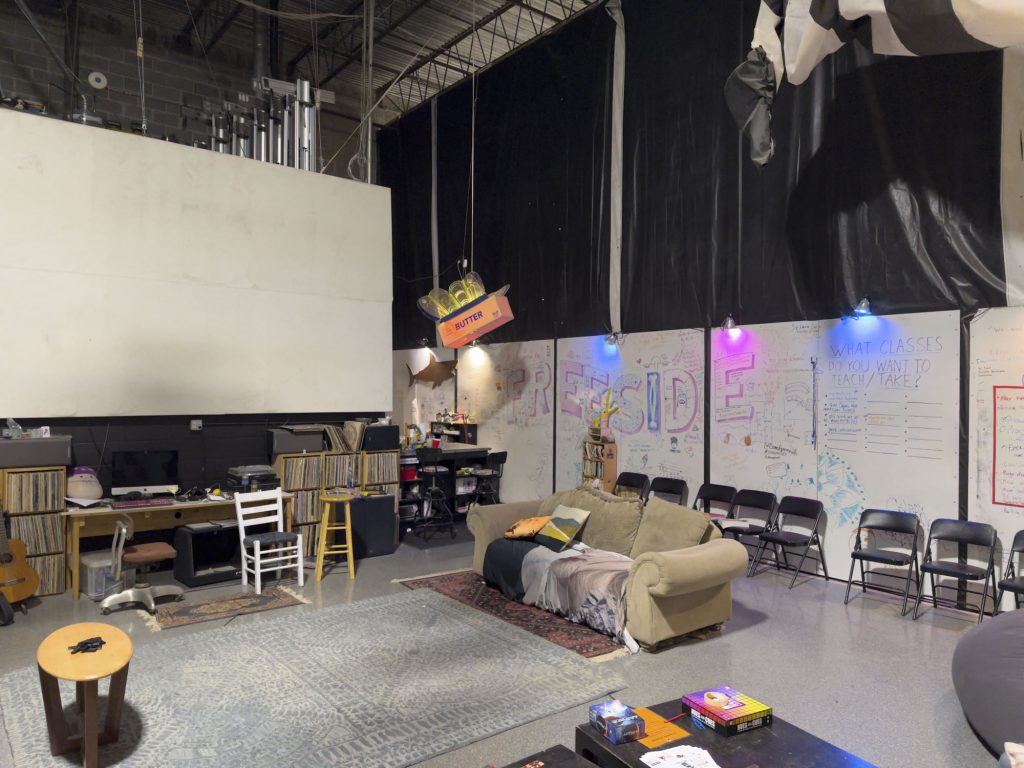
“In 2022 and 2023, we had lots of conversations about how to make things welcoming for everyone, especially people who don’t feel empowered to be in a makerspace and use tools,” Peabody continued. “This room right here,” she added, guiding me into Freeside’s open foyer, which is ringed with couches and oversized bean bag chairs, a kitchen and community whiteboard, crates of records and electric guitars and nary a hammer in sight, “is something almost no makerspace has.”
One key pillar of Makerspace identity is teaching. Often experienced members will host classes, such as Intro to Welding, which are then advertised on the makerspace’s socials. Peabody saw that Freeside’s classes were attracting women, but mainly in the traditional female crafts of sewing and jewelry. Peabody’s own interest in makerspaces arose from woodworking, and she knew the creative zeal would translate if these non-traditional students believed they could enter the space of “beardy men.”
So, in an effort to turn the tide, she ensured that she and other non-male Freesiders would be swinging hammers or welding plates during the sewing clinics. And it’s worked.
As the nonprofit has grown, a nucleus of Freesiders — everyone from the president down is volunteer, including Fink and Peabody — had dedicated the hours to make the experiment work. “The joke,” Fink says, “is that you start out [at Freeside] to do a project. And then [Freeside] is the project.” But Fink and Peabody say their labor bears fruit. “Last year, 260 people had access cards, and somehow we don’t have a problem with theft. It’s a really interesting exercise in trust,” Fink said.
MASS Collective

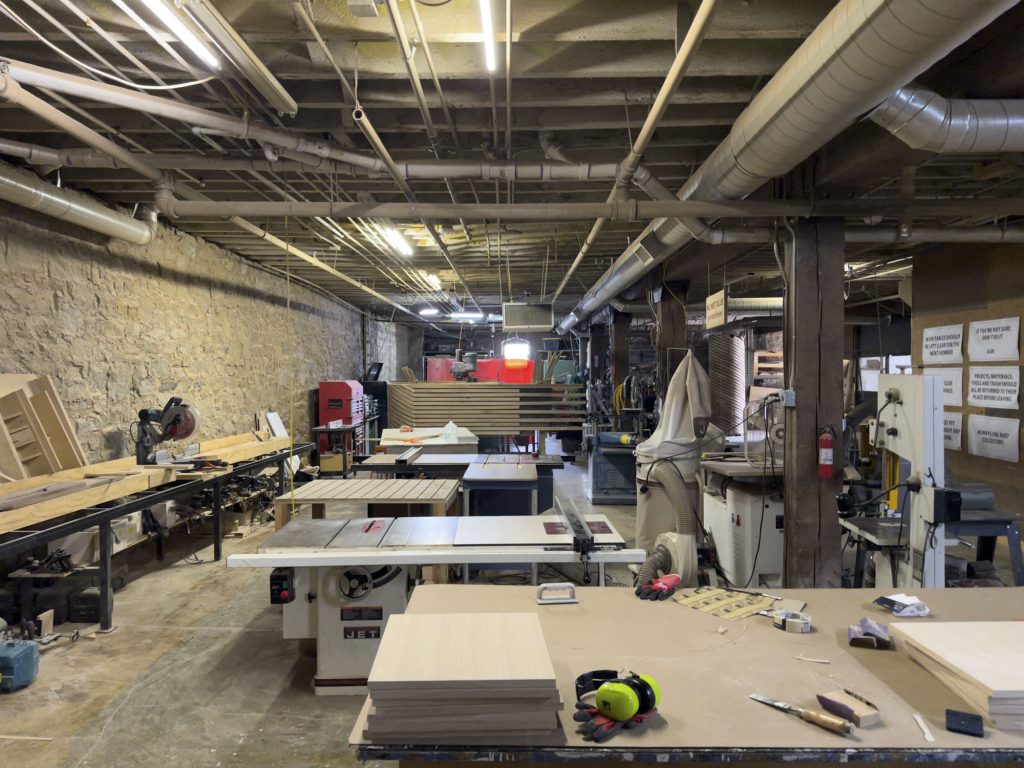
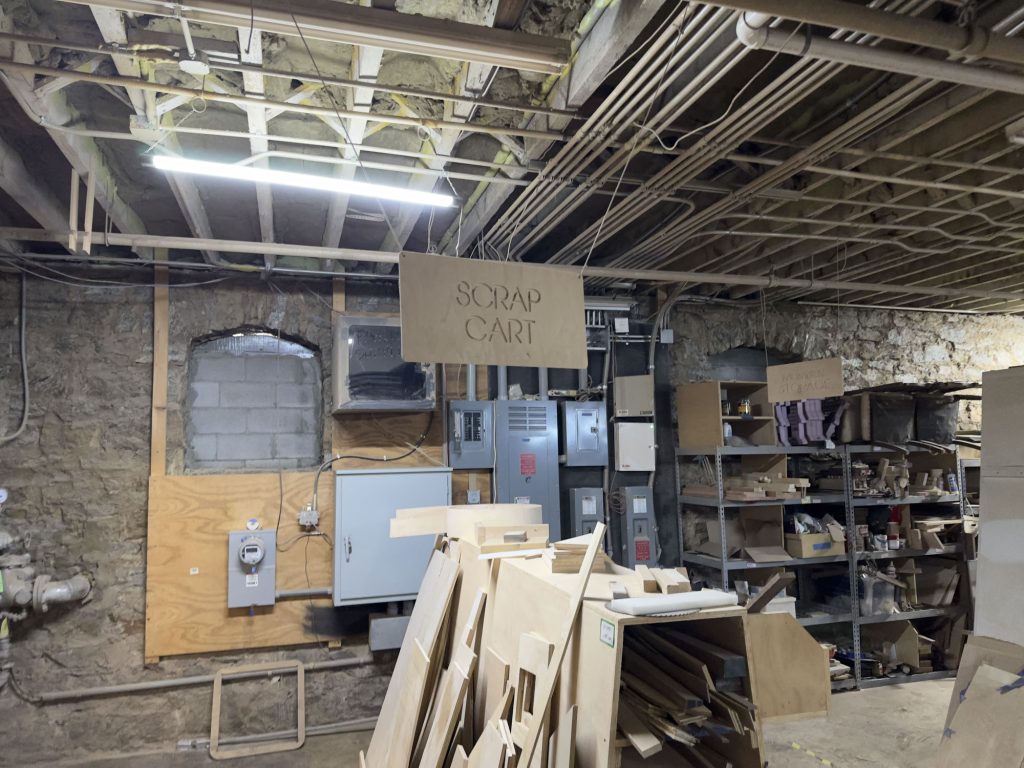


Last September, Jo Onishi and Irene Ruby stepped out of an emergency board meeting at MASS Collective, sobered at the outcome.
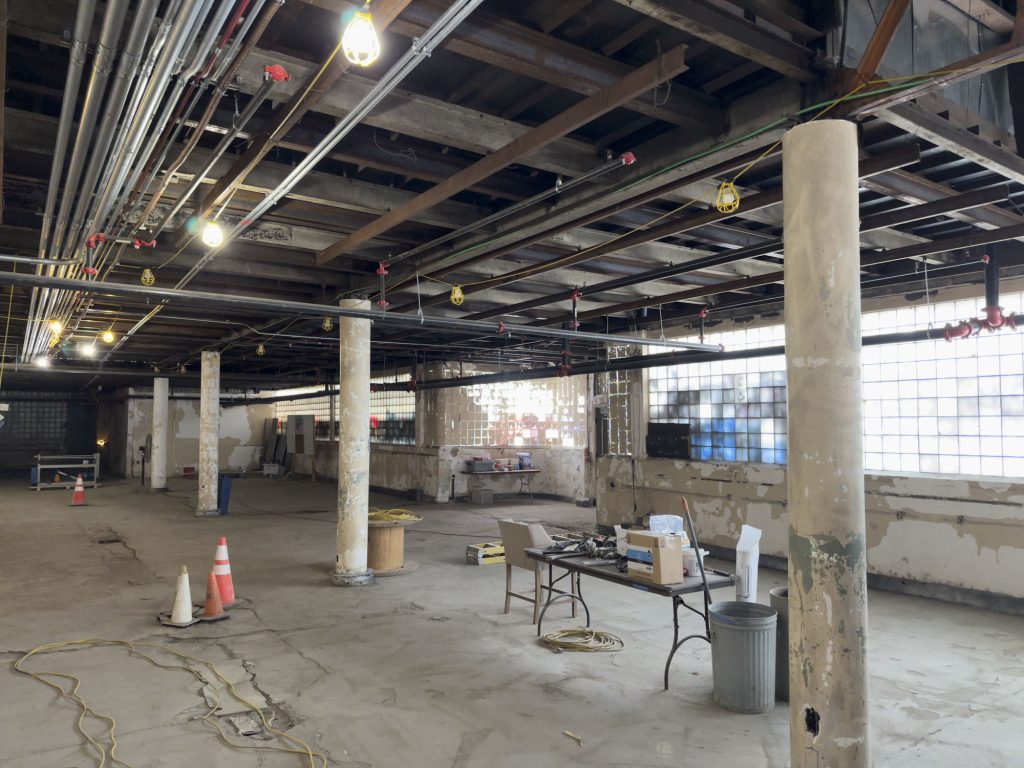
MASS has occupied a stone-walled basement in Castleberry Hill since 2012, but gentrification has been pinching at the coffers for years. Since 2020, the nonprofit has been on the hunt for new digs, and in the past year it finally signed a lease for a 6,000-square-foot space in the Lifecycle Building at West End. Then, last August, MASS’ director stepped down. Onishi and Ruby had called the emergency meeting to volunteer as co-directors, and the board assented.
“We seemed to be in this position that everything hinges on this working out,” Ruby said. “But we believed in ourselves,” replied Onishi.
In the past 14 years, MASS has made several major pivots — it opened as a for-profit collective and later shifted, for example — but it has always emerged with its identity intact.
Like Freeside, members at MASS must be 18, pay dues (though sometimes these may be offset through shop maintenance) and then they receive unfettered access to a work space and tools. But Freeside’s younger sibling is not so freewheeling: MASS’ membership base is a quarter the size of the former’s, with monthly dues more than twice that of Freeside. Applicants must submit a portfolio of work; architects, engineers and full-time artists number among current members.
“I would say every member here produces industry-grade work,” said Ruby. Many of these craftspeople lean to the workshop archetypes of wood and metal fabrication, with a decided bent for “analog” tools. That prestige doesn’t bar membership for the layperson, but it entails a seriousness to the process.
Take Zach Thompson. Six years ago, he was working a “dead-end warehouse job” when he found out he was having a baby girl. With permission from his boss and using YouTube as a mentor, Thompson began collecting the warehouse’s scrap lumber to assemble workbenches to sell on Facebook Market.
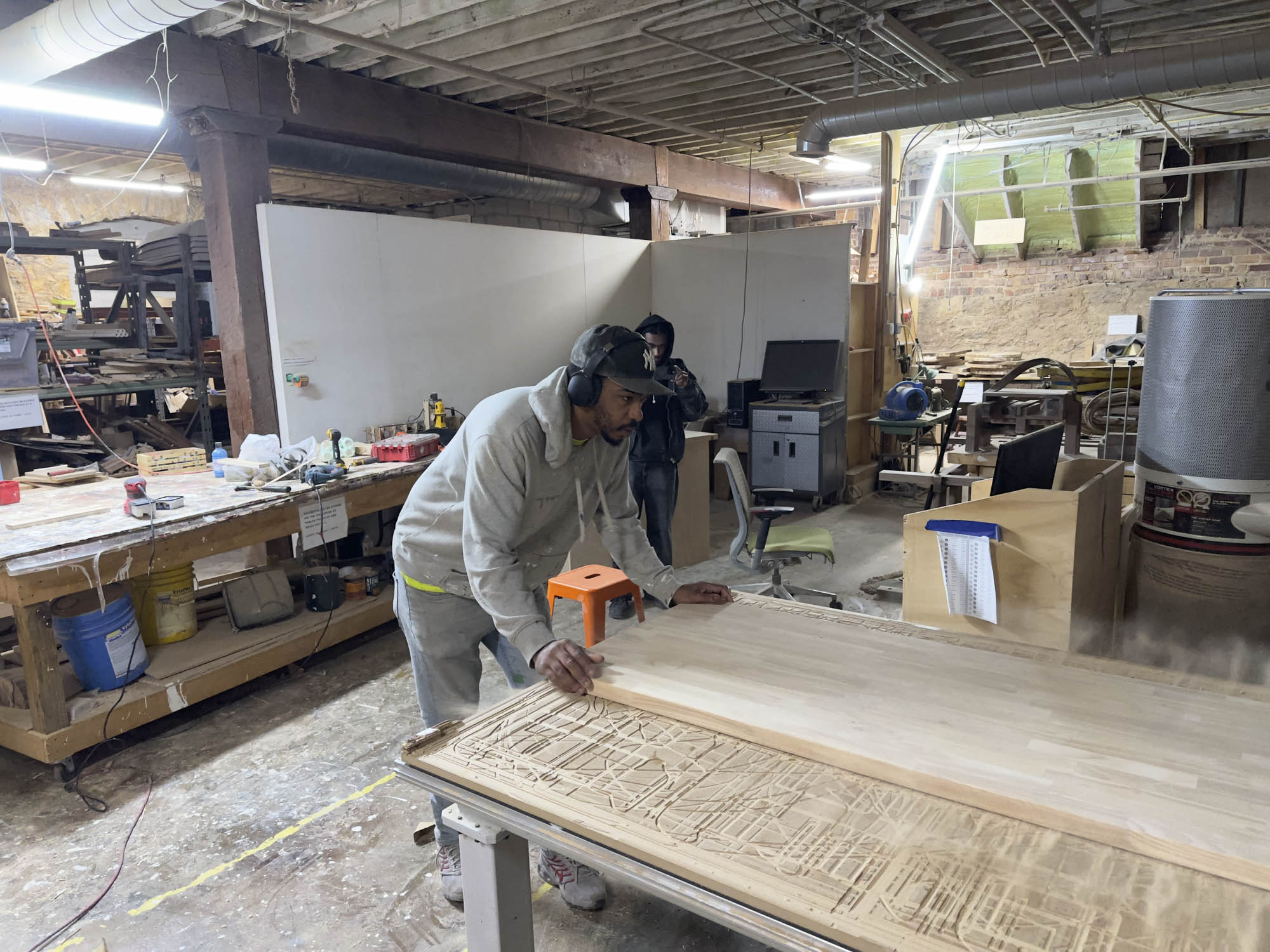
His confidence grew and he officially joined MASS, then spent seven months teaching himself to use its CNC machine — a computer-guided router that grinds and cuts wood to within a hundredth of a millimeter of specification. When I visited Thompson, he was finishing the design of a coffee bar. He runs his full-time business out of MASS’ workshop, with contracts coming in from around the Southeast. His daughter Zai recently celebrated her 6th birthday, and he says with his schedule he’s able to be home with her.
MASS will soon begin transporting its tools to the new location in March and should be fully moved by April, according to Ruby. She says the new space is unfinished but that MASS can draw from the expertise of its membership for wiring, ventilation installations and so on — and they will enjoy rent at a fifth of what they currently pay along with a promising partnership with Lifecycle, which upcycles building materials and “really cares about us surviving.”
“Because of the community, we will be OK,” Onishi said. Ruby nodded in agreement. “Everyone believes in it.”
Decatur Makers


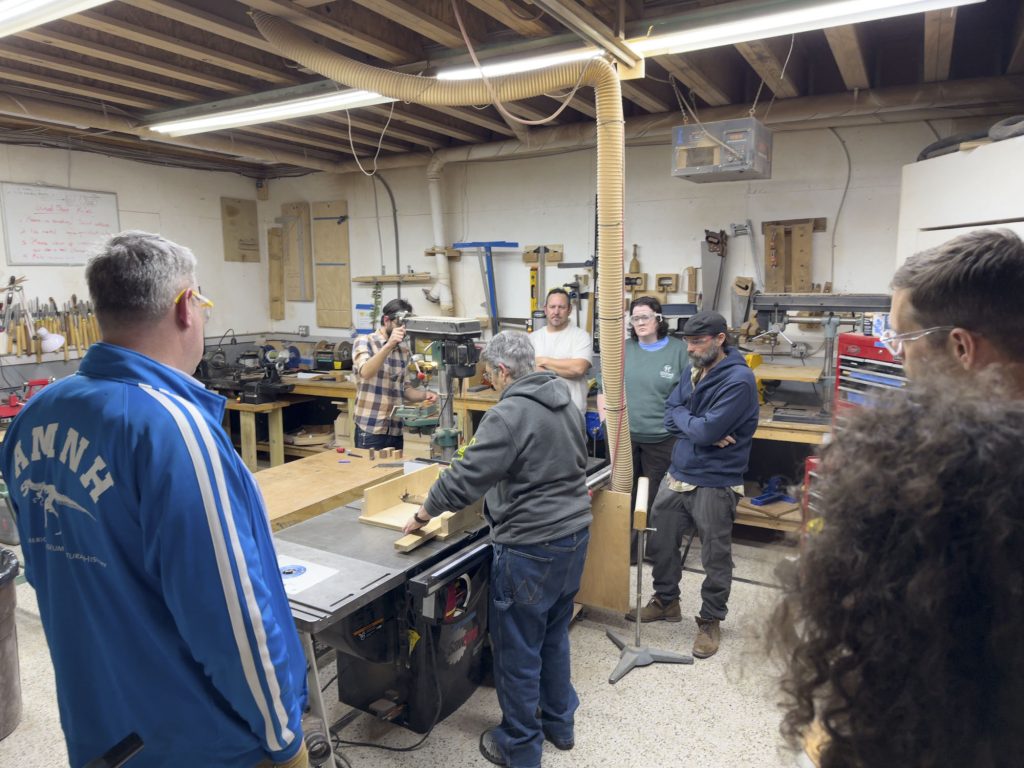
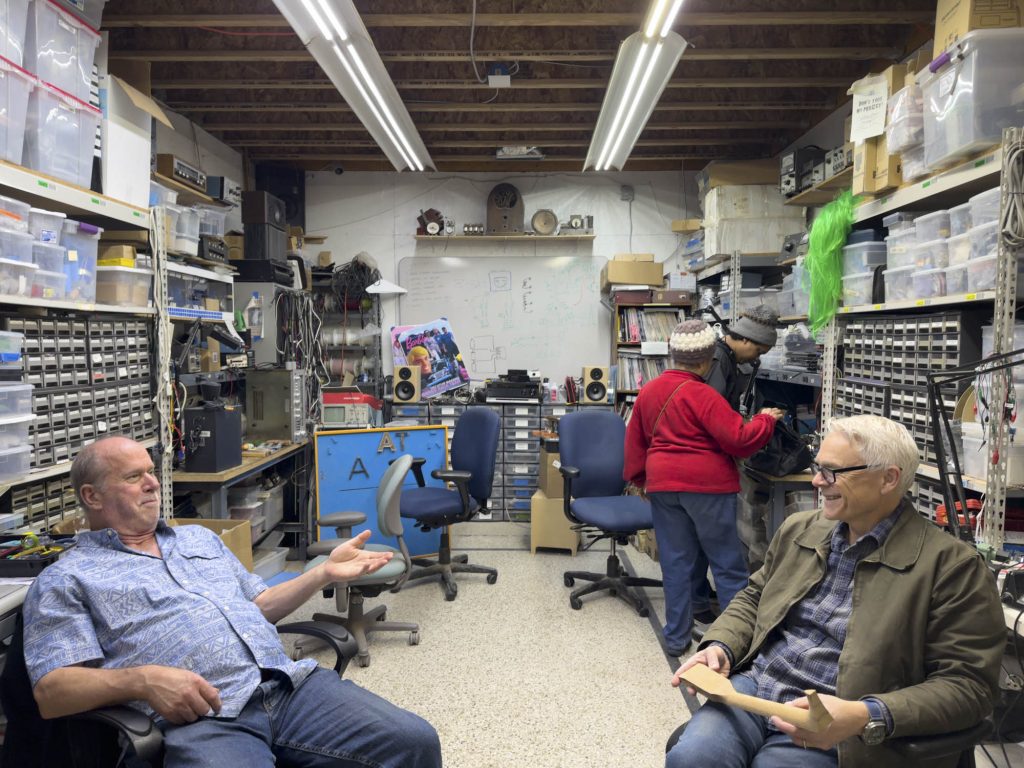
In the lot behind First Christian Church of Decatur stands a red brick building with a gable roof and 6-foot-tall arched windows. Inside is a workshop with table saws, planers, a laser cutter — all accompanied by the smell of sawdust. Decatur Makers is undeniably a makerspace with a makerspace’s priorities.
That these priorities are dialed to slightly different frequencies than Freeside and MASS also is undeniable.
In many ways, it helps to understand Decatur Makers as MASS’ natural inverse: The former has monthly fees of $35 and a roster of 620 members; MASS asks for $180 dues from 50 members. Where MASS’ artisans have devoted hundreds, if not thousands, of shop hours honing their passion, many of Decatur’s makers are just starting out.
“One thing that is different about us is being able to bring youth into the space, and being family-friendly and a family-oriented makerspace,” said Decatur Makers Executive Director Kalia Morrison. “We’re huge on that.” Every month, free classes are held inside the red brick walls for different youth groups: girls; middle schoolers; elementary-aged children. Three-year-olds have a night.
But Decatur Makers is also a 24/7 space, and most nights the work benches are occupied by adults. Bill Crispell, who is in his mid-70s, began volunteering at Decatur Makers after a neighbor persuaded him that the workshop needed help from people who knew how to operate metal lathes and other machine tools. Crispell had to be talked into it because he already had a home workshop, he says, and saw no need to purchase the membership and drive to a different shop. But, eight years later, he’s found that “the real value isn’t the machinery; it’s the knowledge between the years of the members.”
Really what distinguishes Decatur from its peers isn’t expertise or its crowds that fall on both sides of the 20-to-30-year-old spectrum but instead how closely it hews toward serving public good. “We tend to run our makerspace like a mission-driven nonprofit,” said Morrison. “It definitely helps to have a vision and a group of folks with experience outside of working table saws” when it comes to building its community networks.
On one side of this network flows resources: First Christian Church charges the makerspace a dollar a year and a utilities offset to use the building. At the nonprofit’s 2025 end of year fundraiser — one of a few it holds every year — Decatur Makers raised $65,000, entirely through individual donations. And volunteers run many of its safety classes, workshops and STEM nights.
In turn, Decatur Makers provides those free in-house workshop classes. It also partners with other nonprofits to take its programming to underserved schools in Clarkston, Covington and its namesake city, Decatur. Morrison says these programs expose students to science and engineering fields in order build confidence in their problem solving abilities.
Since Morrison joined in 2022, Decatur Makers’ membership has grown by almost 70%. She says some of the growth is due to the organization’s efficiency, and much of it to its heart.
“Decatur Makers had, way before my time, this big sense of community and just this great social vibe where people want to come. They want to be in a place where they feel they belong, you know, where they have that belonging. And it’s just easy to be there,” she said.
Scraplanta


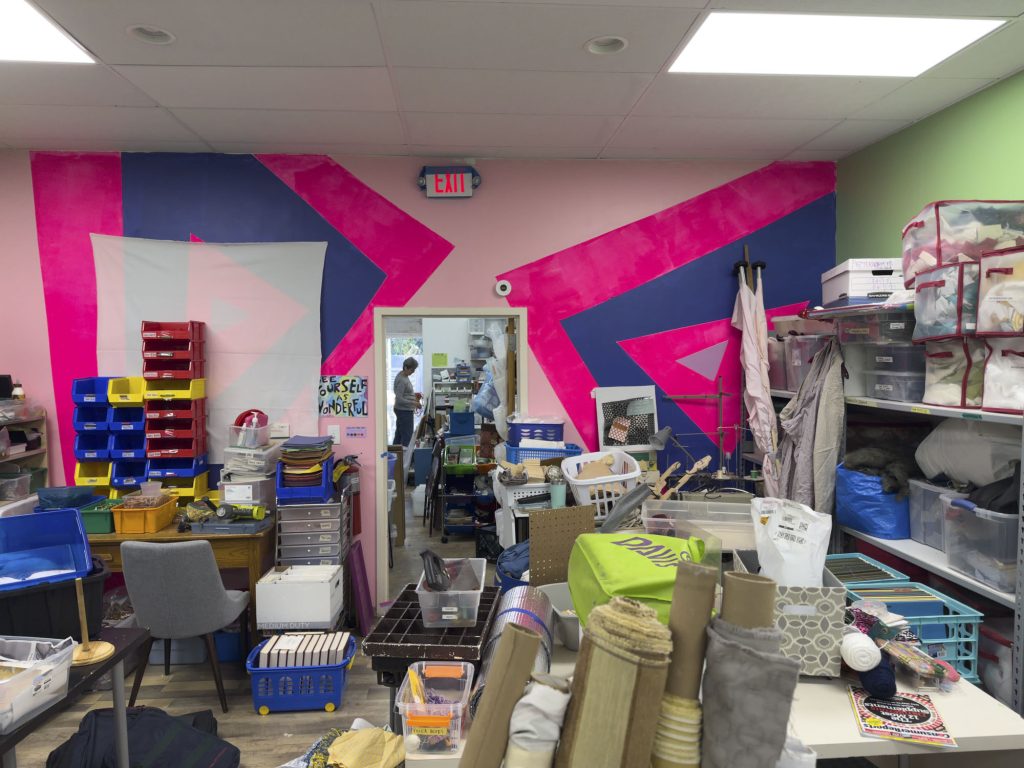
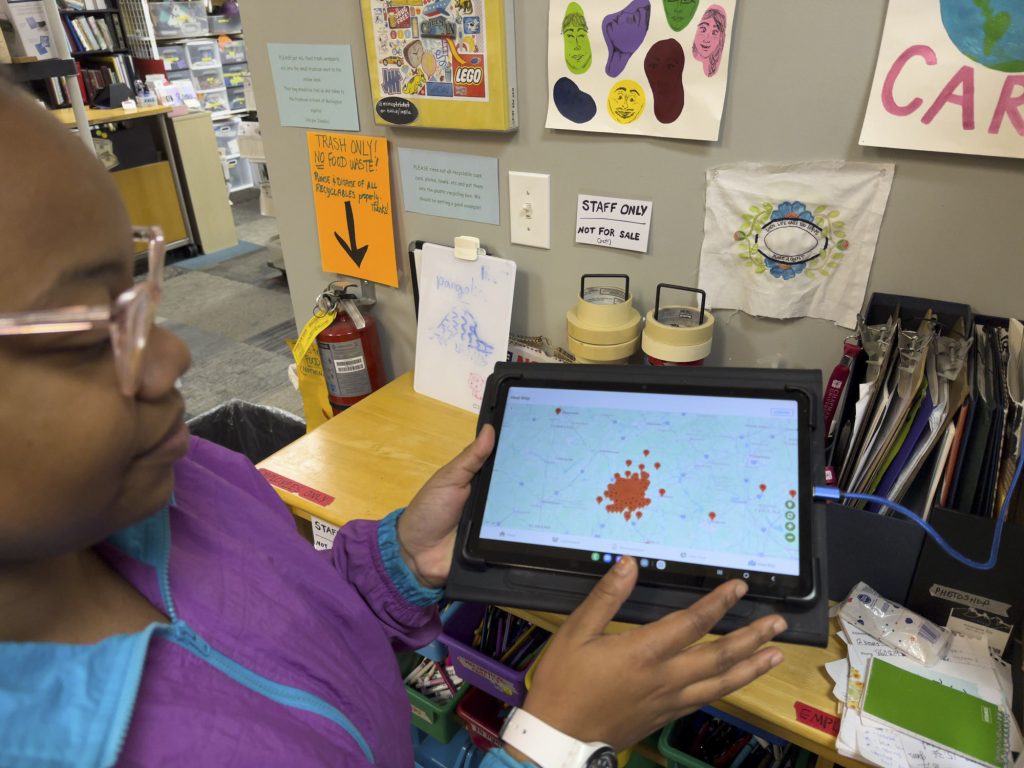

Re-animated after a pandemic-induced stasis, Scraplanta is young, hip and bursting at the seams.
In four years it has opened three locations — in 2022 at a former H&R Block in Tucker, in 2024 a workspace in Adair Park’s CreateATL hub and a pop-up in Duluth in 2025. Each space is half an art upcycle thrift, half a sustainable arts workshop.
“What’s next is now we just need bigger stores,” said Jonelle Dawkins, Scraplanta’s executive director.
Unlike other makerspaces, Scraplanta does not have an always-open workroom. Rather, its art-supply thrift stores open at various parts of the week, and no two stores keep the same hours. Donations of every imaginable art material, from framed canvas to cardboard tubes, are weighed, logged and then stocked. Prices on its products range from half MSRP to fill-a-bag: $10 for an IKEA tote; a dollar for a ziploc. According to Symone Gaskin, Scraplanta’s community coordinator, the idea is to make creating art more accessible to underrepresented groups.
In practice, it’s the classes that tie Scraplanta to its origins. Gaskin lists jewelry and paper-making, meditation through art, junk journaling (in which found materials are used to reflect) and the “absurdly popular” sewing classes that are offered monthly, among others.
At the height of the pandemic, Dawkins was in North Carolina working on her MBA. After graduating in 2021, she applied and became director of Scraplanta and since then has been a one-woman wave of energy. In her first year, she untangled a zoning snafu at the Tucker location, galvanized Scraplanta’s pre-pandemic volunteer mailing list and reorganized the makerspace to receive official nonprofit status.
“[Our community] is really everything that powers us,” she said, which she has built through a mixture of savvy social media posts — at present, Scraplanta has 21,000 Instagram followers, double where it was last year — and chatting in line at the fabric store.
Curiously, the charm of a supermarket checkout conversation is the exact appeal these craft classes hold for Gen Zers, Dawkins believes. Now approaching 30, this generation has never had a moment they were not beholden to a screen. Eighteen months of social distancing only compounded digital weariness. Dawkins has seen a generation of 20-somethings emerge post-pandemic hungry for physical creation and flesh-and-blood camaraderie.
“There’s this emphasis on crafting and building your home and your life that’s more natural and more real than the manufactured environment that we’ve been given,” said Dawkins.
::
Ben Austin is a freelance writer living in Atlanta. When he’s not backpacking or camping with his family, he loves pursuing human interest stories and teaching.
STAY UP TO DATE ON ALL THINGS ArtsATL
Subscribe to our free weekly e-newsletter.

