Atlanta Opera tackles the genre-defying ‘La Belle et la Bete’ by Philip Glass
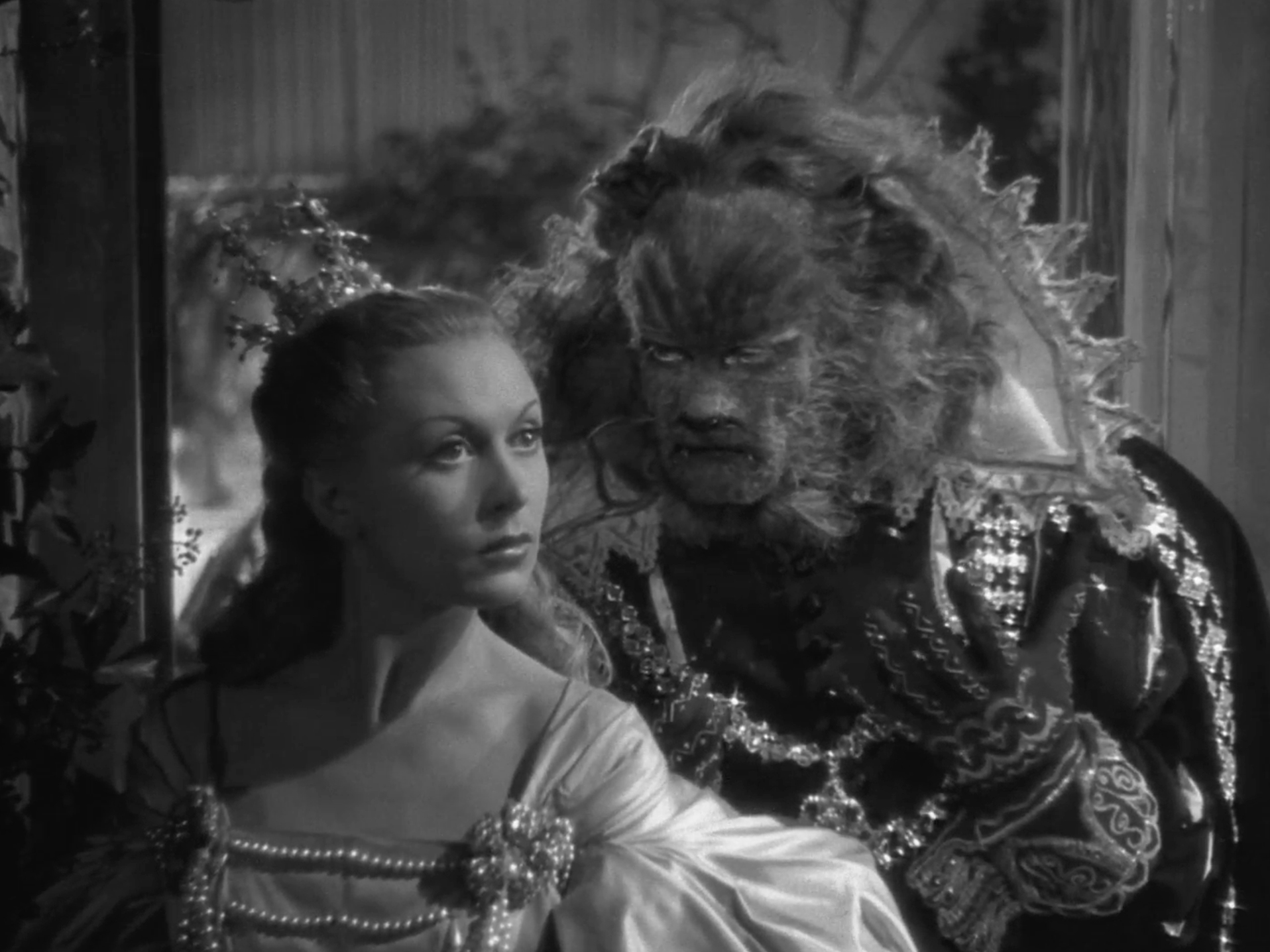
The work blends live performance with Jean Cocteau’s 1946 film version of ‘Beauty and the Beast.’
::
Catholic philosopher G.K.Chesterton once wrote, “There is the great lesson of Beauty and the Beast that a thing must be loved before it is lovable.” Such a sentiment could apply equally to the widely beloved but no less polarizing work of Philip Glass, a composer whose repetitive, cyclical style captivates even as it remains an acquired taste.
Both Chesterton’s sentiment and Glass’ unflinching musical ethos will be on full display in the Atlanta Opera’s upcoming November 15 mounting of La Belle et la Bête, Glass’ live opera soundtrack designed for performance alongside the 1946 Jean Cocteau film version of Beauty and the Beast.

“When we open ourselves up to art of any kind, we are, in the moment, if not deciding to love it, at least opening the possibility of loving it,” concurs conductor Ryan McAdams when I pose Chesterton’s premise to him. “If we decide early on that we’re going to keep our mind closed to something, the art can’t reach us.”
There’s a long-standing tradition of modern composers writing new soundtracks for classic silent films and early talkies. The Atlanta Opera already dipped into these waters a couple of years ago with a performance of Michael Shapiro’s ominous score to the legendary Boris Karloff film adaptation of Frankenstein. Other such adaptations abound, with F.W. Murnau’s Nosferatu and Fritz Lang’s Metropolis getting similar treatment from contemporary composers through the years. But as with any tradition, Philip Glass isn’t just there to throw a wrench into the proceedings — he is the wrench.
“Glass wants to force you to deal with having to watch two people performing the same character at the same time,” says McAdams, emphasizing the uncanny disparity between seeing the actors on screen as live actors sing their lines. “It ends up creating a new genre. He’ll call it an opera, almost for lack of a better word. I think he’s trying to reverse engineer a new kind of music theater experience.”
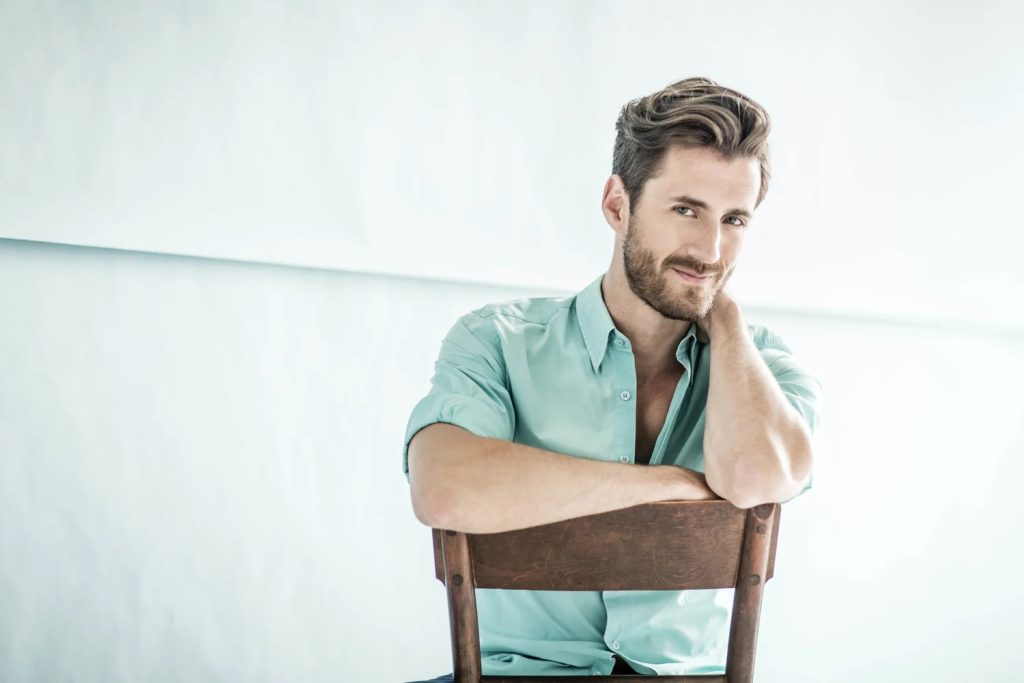
“It’s difficult, but it’s a very collaborative kind of difficulty,” says baritone Hadleigh Adams, who plays the titular beast. He’s enthusiastic for the part — it’s one he’s done elsewhere before and always relishes — but points out that there’s a tremendous amount of precision at work in making scenes and music line up on cue.
Both Adams and McAdams speak of a curious dichotomy in La Belle et la Bête: The work affords tremendous interpretive freedom to the performers and ensemble while still hinging on specific cues and the rigid structure of syncing to film. “I love singing his music because it’s very clear what effect he’s trying to give you,” explains McAdams, elaborating on the range of stylistic interpretation allowed within prescribed limits. “You might be like an ATV taking a fast corner but not going into the woods.”
For Adams, that dichotomy is part of the work’s multilayered appeal. “It creates a number of dissonances that your brain has to reconcile,” he explains. “We associate Philip Glass’ music so much with ‘contemporary’ music of the last 40 years. And yet here we’re watching a film that’s in black and white where all of the special effects are done in-house and everything is incredibly of its time.”
G.K. Chesterton’s aforementioned quote about Beauty and the Beast is part of a larger meditation on the nature of fairy tales: Their simplicity and attention to childlike wonderment belie the tremendous depth of their messages. McAdams’ own train of thought seems to be boarding at the same station. “Fairy tales on the surface can seem simple, but of course they have all of this enormous psychological complexity underneath them,” he continues. “It can seem less complex than other music of its time, yet underneath it is this tremendous awareness of color, architecture, structure and harmony that is always below the surface, working on you in a different way.”
It’s clear to hear them talk that both singer and conductor are entranced by the beguiling nature of Glass’ artistic vision for La Belle et la Bête. Far from being a stumbling block, that challenging dualistic nature seems to be at the heart of the opera’s appeal.
“A work like this piece is asking you to take in a lot of different vocabularies at the same time,” explains McAdams. “You might love Philip Glass’ music already, and you might love Jean Cocteau’s films already … Do you love the marriage of them? I think if you like either of those things and you come in with a desire to be transported by it, the love for this project will reveal itself to you.”
Where & when
Atlanta Opera performs La Belle et la Bete at 7:30 p.m. November 15 at the Cobb Energy Performing Arts Centre.
::

Jordan Owen began writing about music professionally at the age of 16 in Oxford, Mississippi. A 2006 graduate of the Berklee College of Music, he is a professional guitarist, bandleader and composer. He is currently the lead guitarist for the jazz group Other Strangers, the power metal band Axis of Empires and the melodic death/thrash metal band Century Spawn.
STAY UP TO DATE ON ALL THINGS ArtsATL
Subscribe to our free weekly e-newsletter.

PLEASE SUPPORT ARTSATL
Your Gift Sustains the Coverage You Count On!
Related Posts