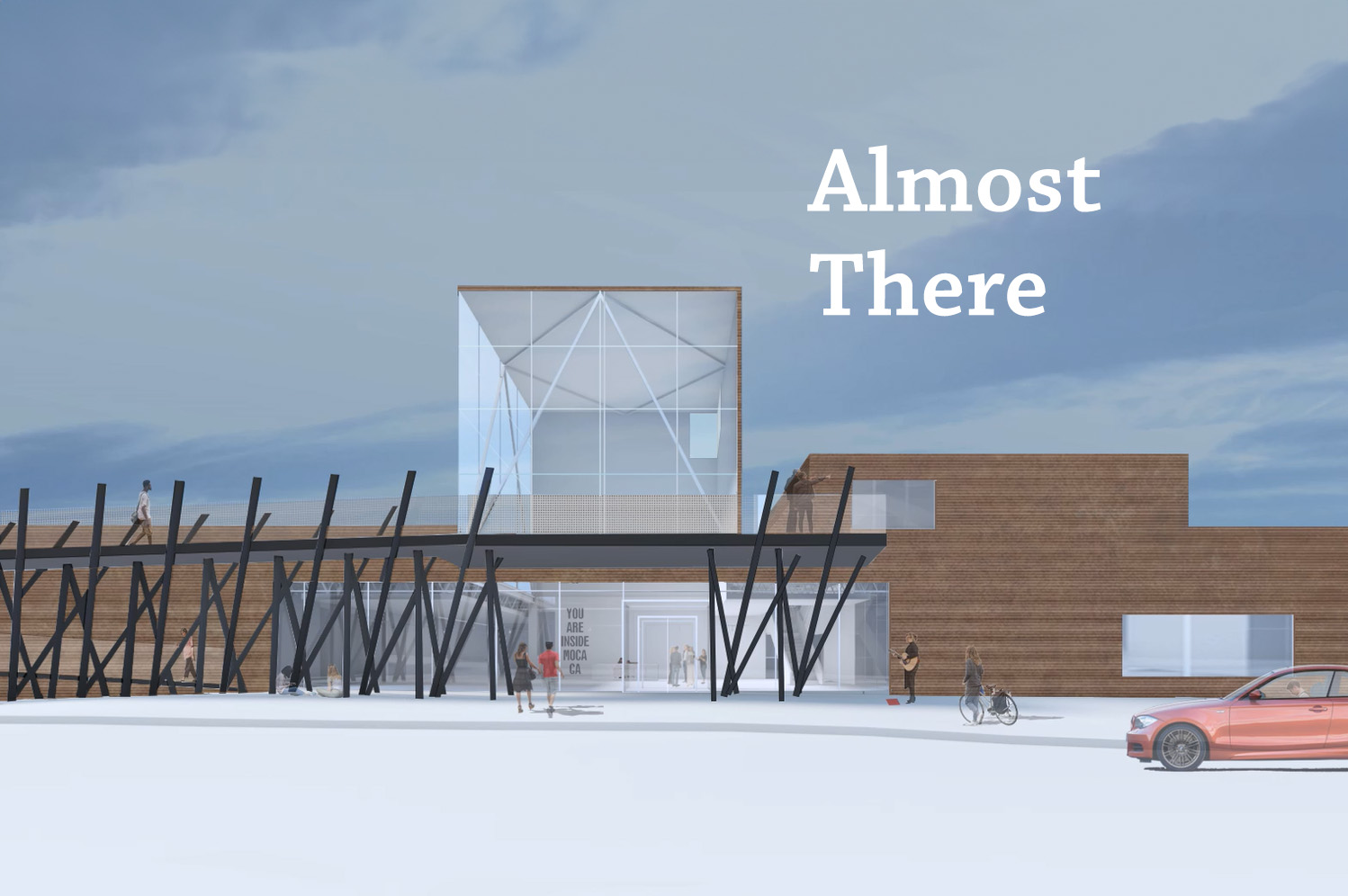
A $2-million contribution from the city is catapulting MOCA GA’s building project
The Museum of Contemporary Art of Georgia has been moving from one rented space to another since 2000. A recent $2-million contribution from the city has put a permanent home within reach.
::
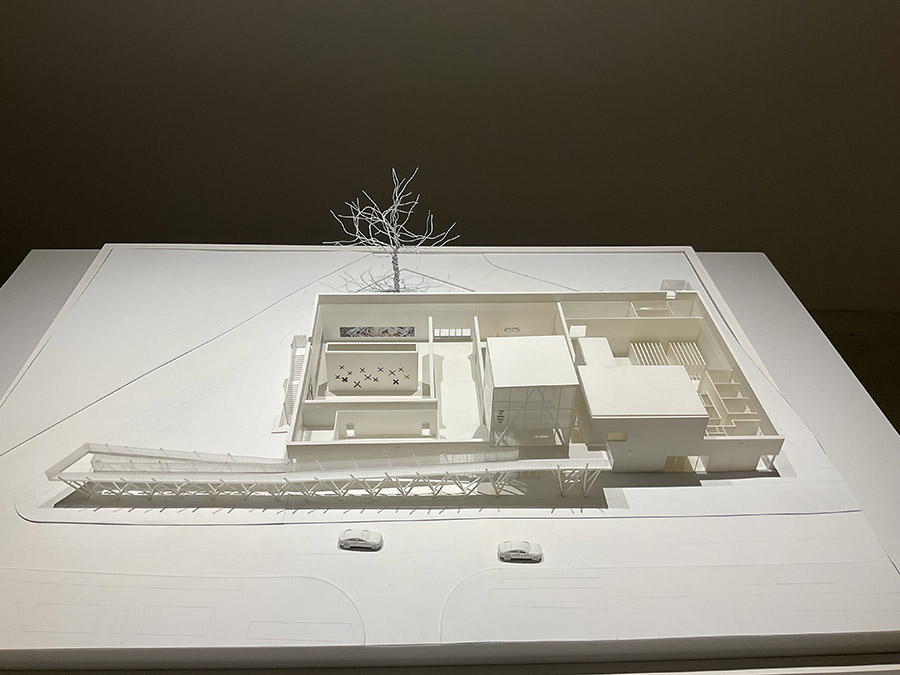
In a corner of the Museum of Contemporary Art of Georgia’s exhibition space, a small, white 3D model depicts its upcoming construction project at The Goat Farm arts center, a 12-acre arts hub located in West Midtown. Around the model, the museum quietly buzzes with activity. On one side, an exhibition of Namwon Choi paintings is being prepared for an opening. On the other side, artworks peek out from inside the museum’s storage room.
The room, which holds much of the museum’s 1,600-item permanent collection, is filled from floor to ceiling with works of all sizes and mediums arranged in stacks and fit into shelves. MOCA GA has been collecting the work of Georgia artists for 24 years, since its founding in 2000. When the museum was initially founded, visitors could walk through its collection of 250 works. Now the permanent collection has vastly expanded and the archives collection measures more than 400 linear feet.
“We’ve grown immensely, so there isn’t a way you can have people wandering through a collection of this size,” Stacey Savatsky, the museum’s archivist and director of collections and exhibitions, said. The new 26,000-square-foot building will have a library and reading room that will allow for easy access to the archives. Savatsky’s office, which is currently located in the crowded storage room, will be located near the reading room so she can assist visitors.
A recent $2-million contribution from the city, facilitated by Mayor Andre Dickens for the museum’s $16.4 million Grounded building campaign, will go a long way to make this possible. The investment marks a significant increase from the city’s typical arts funding levels and is notable even at a statewide level. According to Art Matters, Atlanta, as of 2023, the state of Georgia tied for last place in the nation for per capita government arts funding. The level of financial support represented by the city’s contribution is comparable to the substantial funding seen for large arts organizations in peer cities such as Philadelphia and Seattle.

MOCA GA began as a 5,000-square-foot rented space on Peachtree Street, not far from the High Museum, and moved to the current location on Bennett Street in 2007 as part of the MOCA GA/TULA arts complex. President, CEO and Director Annette Cone-Skelton always knew she wanted MOCA GA to have a sustainable and permanent facility large enough to provide Atlanta artists with the resources and supportive community of staff needed to help create their visions.
With expansion in mind, the museum’s team considered renovating within the Bennett Street building. Challenged by the cost of rent, however, they ultimately decided to buy a plot of land and then raise the funds to pay for construction. The recent contribution from the city brings them to 90% of their goal — less than a $1 million away.
MOCA GA had been looking for property since 2016 and secured the 1-acre plot of land in 2019 at The Goat Farm. The location will place MOCA GA in the center of the campus and within a 5-mile radius of the High Museum, the Westside reservoir and educational institutions such as Georgia Tech, Spelman and SCAD.
“We couldn’t ask for a better location in terms of where it’s located in the city,” Cone-Skelton said.
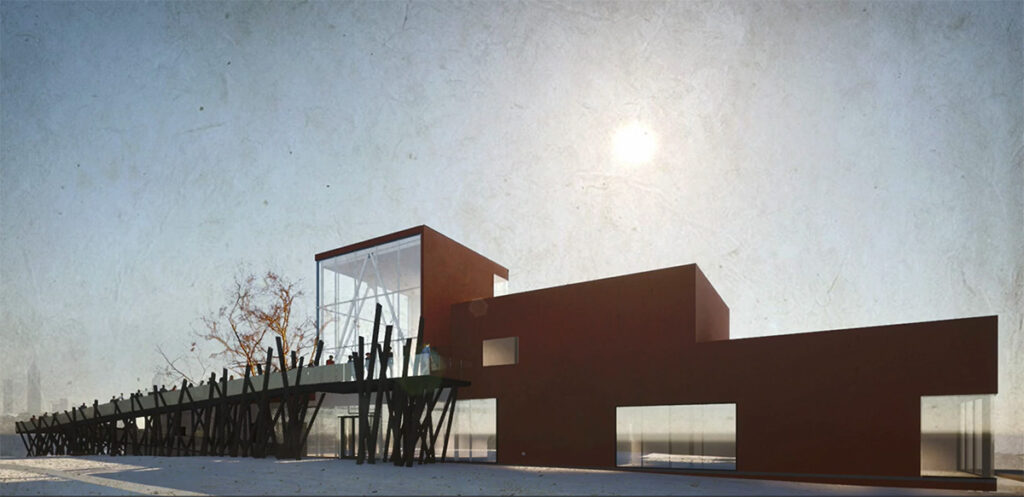
The new building is designed by the Atlanta-based architectural group Mack Scogin Merrill Elam Architects and matches The Goat Farm’s 19th-century industrial aesthetic through the use of weathered steel on the exterior of the building. The promenade, a long ramp that provides access to the top floor from the ground, pays homage to Atlanta’s history with the railroad through its trestle-like configuration.
The promenade leads up to the rooftop, which will function as an event space that can also be rented. The first floor will include a reading room and library; the second floor will hold five gallery spaces, and a cafe will open out to a sculpture garden. The interior of the building is designed to allow for a natural flow from one gallery to the next. As part of The Goat Farm’s development, new art studios will be constructed around the building, along with affordable housing.
Cone-Skelton intends for artists to use the new space to create work and participate in exhibition design in a hands-on manner.
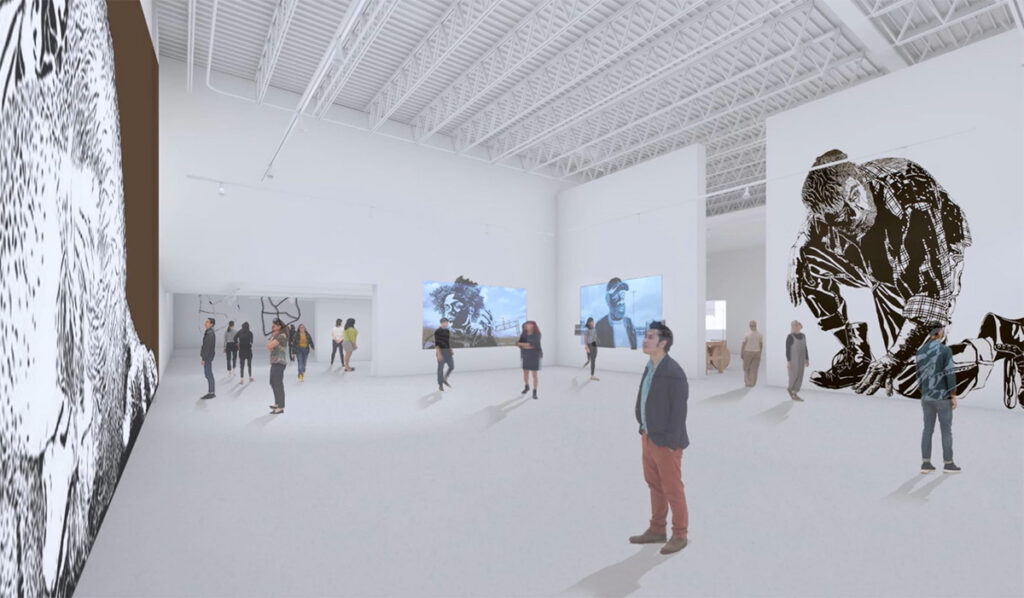
“It’s all very artist-centric. The artist knows best how to display their work. You give them the finances, the space, the support from staff and they do their best work. So I’ve seen that just grow and be embraced by the art community,” Cone-Skelton said.
Artist Rocío Rodríguez recalls that she was able to curate her 2019 exhibit, a 30-year retrospective of her drawings titled Thirty Years on Paper, based on how she envisioned the works’ relationships to each other. Rodríguez, who has served on the board of directors for a year, also donated her own archives to the museum. She recalls another tradition that has always been artist-led: yearly pin-up shows, which invite local artists to pin one of their works on the wall, on sale for one night.
Architect Mack Scogin says the “lantern,” a box-like structure on the top level that looks out at the horizon — or to the public as a welcoming gesture — reflects the nature of the institution as a place for artists in all stages to show their work.
“The building is a kind of container for this art production. That’s what makes it so exciting. It’s not an elite organization. It’s taking and engaging it to the broader community,” Scogin said.
“The premier cities of the world have major museums, but they also always have these museums that support the local and regional artists of that culture, and that’s what MOCA’s doing for Atlanta,” Elam added.
Outside, a preserved sycamore tree, known as a “legacy tree” for its longevity, will accompany the building. Cone-Skelton says the building is designed such that in the future, it can hold a second story structure and expand the rooftop even further. Construction is expected to begin in September, with doors opening to the public in mid-2026.
“We see this building as a factory for artists to create their work,” Cone-Skelton said. “I really believe that if you give artists the support they need, they do their very best work.”
CORRECTION: An earlier version of this article failed to adequately distinguish between the permanent collection and the archives. They are separate bodies of materials.
::

Mitali Singh is an Atlanta-based writer who is passionate about exploring the intersections between the arts and culture. She is currently a student at Emory University, studying English and creative writing. Her poems have been published in Eunoia Review and FEED.
STAY UP TO DATE ON ALL THINGS ArtsATL
Subscribe to our free weekly e-newsletter.

PLEASE SUPPORT ARTSATL
Your Gift Sustains the Coverage You Count On!
Related Posts